Book Appointment Now
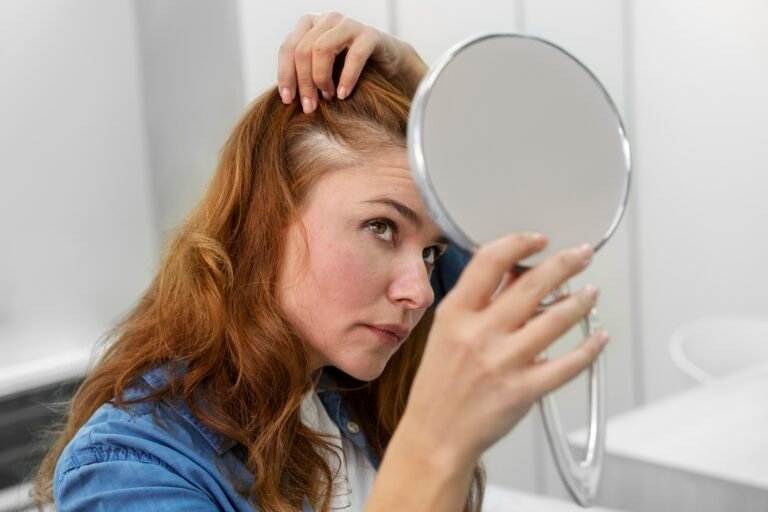
Early Signs of Hair Loss: When Should You See a Dermatologist?
Hair loss often begins gradually. Many people do not notice the early changes until their hairline has visibly receded, the scalp has become easier to see or overall hair density has reduced significantly.
Recognising the early signs of hair loss can help you seek professional evaluation before thinning becomes more noticeable.
Hair fall can occur because of genetics, stress, nutritional factors, hormonal changes, scalp conditions and several other causes. This is why persistent hair loss should be properly evaluated rather than treated only with shampoos, supplements or home remedies.
Is Some Daily Hair Fall Normal?
Yes. Hair naturally moves through a cycle of growth, rest and shedding, so losing some strands each day is normal.
The concern begins when you notice a noticeable change from your usual pattern.
For example, you may suddenly see more hair:
- On your pillow
- While shampooing
- In the shower drain
- On your comb or brush
- On clothes
- Around your workspace or home
Persistent excessive shedding can be one of the earliest signs that your normal hair-growth cycle has changed.
If this continues for several weeks, read our detailed guide on Hair Fall Treatment in Nagpur to understand possible causes and treatment approaches.
1. Increased Hair Shedding
One of the most common early signs of hair loss is an increase in daily shedding.
You may notice considerably more hair while:
- Washing your hair
- Drying it
- Combing
- Running your fingers through your hair
Occasional increased shedding does not always mean permanent hair loss.
However, persistent shedding may be associated with stress, nutritional factors, illness, hormonal changes, genetic hair loss or other conditions.
A dermatologist can help differentiate temporary shedding from progressive hair loss.
2. Widening of the Hair Part
A gradually widening centre or side part can be an early indication of reduced hair density.
This change can initially be subtle.
You may notice:
- More scalp visible along your part
- The part looking wider in photographs
- Difficulty covering the scalp with your usual hairstyle
- Reduced volume around the crown
This type of thinning is particularly important to evaluate if it continues progressing over time.
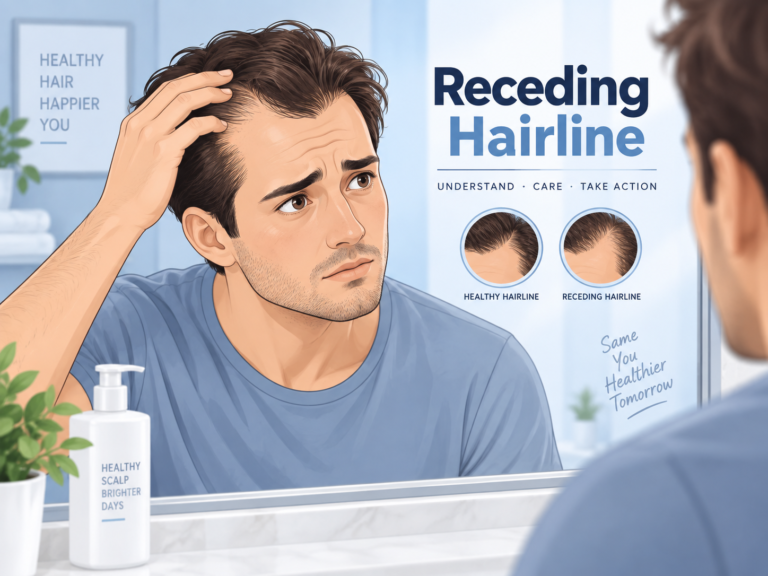
3. Receding Hairline
A changing hairline is another common sign of progressive hair loss.
You may notice:
- Hairline moving backward
- Increasing recession around the temples
- An M-shaped hairline developing
- Reduced density at the front
A receding hairline can occur gradually, making it difficult to notice without comparing older photographs.
If the recession continues, early evaluation may help determine whether the pattern is genetic and whether treatment should be considered.
4. Thinning Around the Crown
Hair thinning around the crown can initially be difficult to notice because this area is not easily visible in the mirror.
Common signs include:
- More scalp showing under bright light
- A larger visible area at the crown
- Reduced hair density in photographs taken from above
- Difficulty styling hair to cover the area
Crown thinning can be associated with pattern hair loss and may progress gradually.
5. Reduced Overall Hair Volume
Sometimes hair loss does not begin with one obvious bald area.
Instead, your overall hair volume may gradually decrease.
You may notice:
- A thinner ponytail
- Less hair volume while styling
- Hair appearing flatter than before
- Scalp becoming more visible
- Hair feeling less dense while washing
Gradual density loss may indicate progressive thinning even when obvious bald patches have not developed.
6. Hair Becoming Finer
In some forms of progressive hair loss, individual hair strands may gradually become finer.
Hair may appear:
- Thinner
- Weaker
- Shorter
- Less dense
- More difficult to style
This process can occur when follicles gradually produce finer strands over time.
A dermatologist-led assessment can help determine whether this is occurring and whether a Hair Restoration plan may be appropriate.
7. Increasing Scalp Visibility
If you begin noticing more scalp than before, it may indicate reduced hair density.
This may become particularly noticeable:
- Under bright lighting
- After washing your hair
- When hair is wet
- Around the crown
- Along the hair part
- At the temples
Comparing recent photographs with older ones can sometimes make gradual changes easier to identify.
8. Bald or Patchy Areas
Hair loss does not always develop gradually across the whole scalp.
Some conditions may cause distinct areas of hair loss.
If you notice a new bald patch or clearly defined area with significantly reduced hair, it should be evaluated rather than ignored.
Sudden patchy hair loss may have a different underlying cause from gradual pattern thinning.
9. Persistent Scalp Problems with Hair Fall
Hair loss can sometimes occur alongside scalp symptoms.
Watch for:
- Persistent itching
- Redness
- Flaking
- Excessive dandruff
- Scalp irritation
- Pain or tenderness
- Recurrent scalp infection
Healthy hair growth depends partly on a healthy scalp environment.
If scalp symptoms persist together with hair fall, both concerns should be evaluated.
10. Hairline or Density Changes Visible in Old Photos
Hair loss often progresses slowly enough that patients become accustomed to the changes.
One useful way to identify early thinning is to compare photographs taken several months or years apart.
Look for differences in:
- Hairline position
- Temple recession
- Crown coverage
- Centre-part width
- Overall volume
Photographic comparison can make gradual changes more noticeable.
What Causes Early Hair Loss?
There is no single cause of hair thinning.
Common possibilities include:
Genetic Hair Loss
Pattern hair loss can occur in both men and women and may gradually affect the hairline, crown or overall density.
Stress
Physical or emotional stress can temporarily disturb the natural hair-growth cycle and lead to increased shedding.
Nutritional Factors
Deficiencies involving certain nutrients may contribute to hair shedding in selected patients.
Hormonal Changes
Thyroid conditions, pregnancy-related changes, menopause and other hormonal factors may influence hair growth.
Scalp Disorders
Inflammation, dandruff, infections and certain dermatological conditions can affect the scalp and hair.
Illness or Medications
Certain illnesses, treatments or medications may temporarily or progressively affect hair growth.
Because these causes require different approaches, proper diagnosis is more useful than selecting a treatment solely based on symptoms.
When Should You See a Dermatologist for Hair Loss?
Consider consulting a dermatologist when you notice:
- Hair fall continuing for several weeks
- Progressive thinning
- Receding hairline
- Widening of the hair part
- Visible crown thinning
- Bald patches
- Increasing scalp visibility
- Hair loss accompanied by scalp symptoms
- Sudden changes in hair density
A dermatologist in Nagpur can evaluate the hair-loss pattern, scalp and medical history to help identify the likely cause.
How Is Early Hair Loss Evaluated?
A dermatologist may assess:
- Pattern of thinning
- Hairline
- Hair density
- Crown area
- Scalp condition
- Duration of hair fall
- Family history
- Previous treatments
- Medical history
- Lifestyle factors
- Nutrition
- Current medications
Additional investigation may be suggested when a nutritional, hormonal or medical cause is suspected.
Why Is Early Hair-Loss Treatment Important?
The objective of early evaluation is not necessarily to start an aggressive treatment immediately.
It is to identify what is happening.
When viable hair follicles remain present, there may be more management options than after significant permanent hair loss has developed.
Early diagnosis may also help avoid spending money on unsuitable products or treatments.
What Treatment Options May Be Considered?
Treatment depends entirely on the diagnosis.
Different patients may require different approaches.
Medical Hair Management
Some forms of hair loss may require dermatologist-guided medical treatment.
GFC Hair Treatment
For selected patients with existing but weakened follicles, GFC Hair Treatment may form part of a hair restoration plan.
You can also read our complete guide on GFC Hair Treatment in Nagpur.
Mesotherapy for Hair
Mesotherapy for Hair may be considered in selected cases as part of a non-surgical treatment plan.
For more information, read our guide on Mesotherapy for Hair in Nagpur.
Hair Restoration
Hair restoration is a broader strategy that may involve several different approaches depending on the cause and stage of hair loss.
Learn more about Hair Restoration Solutions at Trichoderm Centre.
Hair Transplant
Hair transplantation may be considered for suitable patients with established areas of permanent hair loss.
It is not necessary for everyone experiencing early hair thinning.
Read our detailed guide on Hair Transplant in Nagpur to understand when transplantation may be considered.
Early Hair Loss: GFC or Mesotherapy?
There is no universal answer.
GFC and mesotherapy are different treatment approaches.
The appropriate option depends on:
- Type of hair loss
- Stage of thinning
- Condition of existing follicles
- Scalp health
- Individual requirements
This is why treatment selection should follow proper evaluation rather than choosing a procedure based on advertisements or recommendations from other patients.
Can Early Hair Loss Be Reversed?
This depends on the cause.
Some temporary forms of shedding may improve when the underlying trigger resolves.
Progressive genetic hair loss may require ongoing management.
Hair follicles that are still active may offer more management possibilities than areas where permanent hair loss has become advanced.
The goal should therefore be appropriate diagnosis and realistic treatment planning rather than expecting the same outcome for every type of hair loss.
Common Mistakes People Make with Early Hair Loss
Waiting Until Hair Loss Becomes Severe
Progressive thinning can continue gradually for months or years.
Frequently Changing Shampoo
Shampoo alone is unlikely to address genetic, hormonal, nutritional or medical hair loss.
Taking Supplements Without Evaluation
Not every person experiencing hair loss has a nutritional deficiency.
Choosing a Procedure Before Diagnosis
Treatment should depend on the underlying cause and stage of hair loss.
Relying Only on Home Remedies
Persistent or progressive thinning deserves professional evaluation.
Early Hair-Loss Evaluation at Trichoderm Centre, Nagpur
With 8+ years of experience and 10,000+ patients treated, the clinic focuses on personalised, safe and evidence-based skin and hair care.
Depending on the diagnosis, a patient’s treatment plan may include Hair Restoration, GFC Hair Treatment, Mesotherapy for Hair or hair transplantation for suitable candidates.
Frequently Asked Questions
What are the first signs of hair loss?
Common early signs include increased shedding, widening of the hair part, receding hairline, crown thinning, reduced volume and increased scalp visibility.
Is increased hair shedding always permanent?
No. Some forms of increased shedding are temporary. Persistent shedding should be evaluated to identify the cause.
Can a dermatologist treat hair thinning?
Yes. Dermatologists evaluate hair and scalp conditions and can recommend treatment based on the type and cause of hair loss.
When should I worry about a receding hairline?
If the hairline continues moving backwards or temple recession becomes progressively more noticeable, consider getting it evaluated.
Can GFC help early hair thinning?
GFC may be considered in selected patients where suitable existing follicles are still present. A dermatologist should determine whether it is appropriate.
Can Mesotherapy be considered for early hair loss?
Mesotherapy may form part of a non-surgical hair restoration plan for selected patients after proper evaluation.
Does early hair thinning always require a Hair Transplant?
No. Hair transplantation is generally considered for selected cases of established permanent hair loss, not every patient experiencing early thinning.
Take the Early Signs of Hair Loss Seriously
Hair loss is often easier to recognise when significant thinning has already occurred, but the process may begin much earlier.
Changes such as increased shedding, reduced volume, a widening hair part or receding hairline can provide early clues.
Rather than waiting for hair loss to become advanced, a dermatologist-led evaluation can help identify the underlying cause and determine whether treatment is needed.