Book Appointment Now
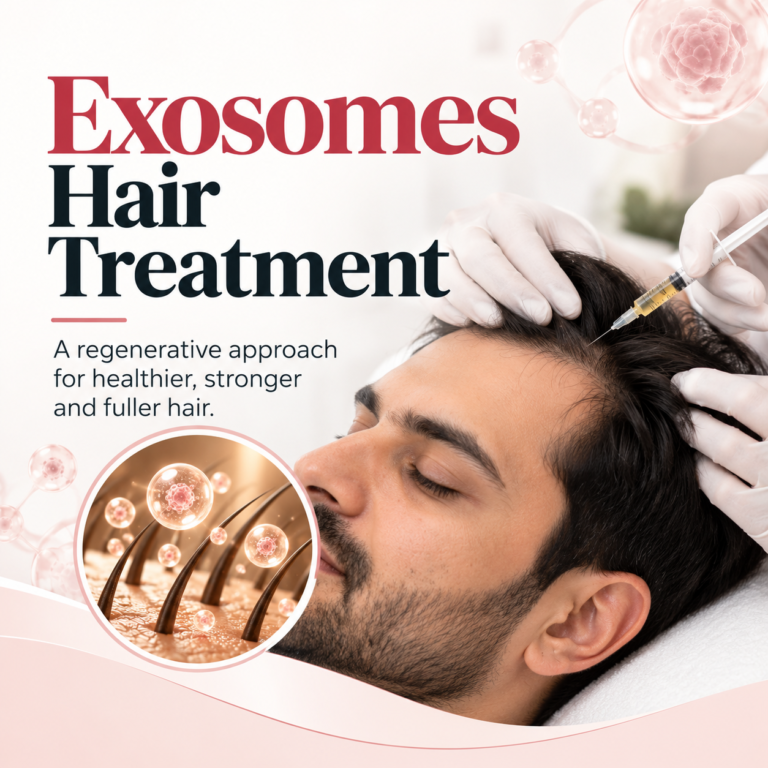
Exosomes Hair Treatment: Benefits, Safety, Clinical Evidence & What to Expect
Hair thinning, a widening parting, a receding hairline or reduced hair density can be frustrating, particularly when conventional hair-care routines do not address the underlying concern. As regenerative dermatology develops, exosomes have attracted interest as a potential approach to supporting hair follicle function and hair growth.
But what exactly is exosomes hair treatment? How does it work, what benefits are being investigated, and is there enough evidence to know whether it is effective?
Exosomes hair treatment is an emerging approach to hair restoration. Early research is encouraging, but stronger clinical evidence is still needed to establish its effectiveness, long-term safety and optimal treatment protocols. It should not be considered a guaranteed solution for hair loss.
At Trichoderm Centre in Nagpur, hair treatment planning should begin with identifying the cause of hair loss and assessing which options are appropriate for the individual.
What Is Exosomes Hair Treatment?
Exosomes are microscopic extracellular vesicles released by cells. They carry biological signals, including proteins, lipids and other molecules, that help cells communicate with one another.
Researchers are investigating whether exosomes obtained from different biological sources can influence processes involved in hair follicle activity, tissue signalling and the hair-growth cycle.
In the context of hair restoration, exosome-based treatments aim to influence the scalp environment and biological pathways involved in hair growth.
However, the term “exosome treatment” does not describe one standardised product or procedure. Products may differ in their source, preparation, composition, concentration, quality controls and delivery method. These differences can affect both their potential effects and their safety.
It is therefore important to understand the specific product and protocol being proposed rather than assuming that all exosome treatments are equivalent.
How Might Exosomes Support Hair Growth?
Hair grows in repeating cycles that include active growth, transition and resting or shedding phases. Different biological signals help regulate these cycles and influence the activity of hair follicles.
Researchers are studying several possible mechanisms through which exosomes might affect this process.
1. Cell-to-Cell Signalling
Exosomes transport biological molecules between cells. Researchers are investigating whether these signals can influence cells involved in maintaining and regulating hair follicles.
This is one of the main reasons exosomes are being studied in regenerative hair research.
2. Hair Follicle Activity
Laboratory and early clinical research suggests that some exosome preparations may influence pathways associated with hair follicle activity.
However, effects observed in laboratory studies do not automatically translate into reliable hair regrowth in people. More robust human studies are needed to establish how consistently these effects occur in clinical practice.
3. The Hair-Growth Environment
Some research has examined whether exosomes influence biological processes associated with tissue repair, inflammation and the local environment around hair follicles.
The relevance of these effects depends on the type of hair loss, the product used and the way treatment is delivered.
4. Hair Density and Thickness
Early clinical studies have reported improvements in certain hair measurements, including hair density and thickness, in some participants.
These findings are promising but should be interpreted cautiously because studies have used different products, treatment methods, participant groups and follow-up periods.
Exosomes have not yet been established as a universally effective hair-regrowth treatment.
What Are the Potential Benefits of Exosomes Hair Treatment?
The potential benefits being investigated include several aspects of hair restoration. The degree to which these benefits can be achieved in routine clinical practice remains uncertain.
Potential Support for Hair Density
Some early studies have reported increases in measured hair density following particular exosome-based interventions.
The size and consistency of any improvement can vary, and current evidence does not allow a reliable prediction for an individual patient.
Potential Improvement in Hair Thickness
Researchers are examining whether certain exosome preparations can influence hair shaft thickness and related measures of hair quality.
Any change depends on factors such as the underlying diagnosis, existing follicle function and the treatment protocol.
Interest in Non-Surgical Hair Restoration
Exosome therapy is being investigated as a possible non-surgical approach to selected hair-loss concerns.
However, non-surgical does not automatically mean risk-free. The product, delivery technique, sterility and clinical oversight all matter.
An Area of Ongoing Regenerative Research
Exosome research may help improve understanding of the biological processes involved in hair follicle function.
For patients, however, scientific promise should be distinguished from a treatment with established, predictable outcomes.
What Does Current Research Say About Exosomes for Hair Loss?
Clinical evidence is developing, but it remains limited.
A systematic review published in 2025 examined 11 clinical studies of exosome-based approaches for hair regeneration. Although the included studies reported improvements in at least one hair-related measure, the researchers noted differences in study design, exosome sources, treatment protocols and follow-up periods. They concluded that better-standardised, higher-quality trials are needed to confirm effectiveness and establish consistent protocols.
A separate review published in Dermatologic Surgery in 2025 also highlighted the limited amount of human evidence and the need for larger studies, longer follow-up and consistent manufacturing standards.
These findings suggest that exosomes are a promising research area, but they do not establish that every commercially available exosome product is effective or safe.
For patients considering treatment, the key questions are:
- What evidence supports the specific product being offered?
- Has the product been studied in people with the same type of hair loss?
- How was the product manufactured and quality-controlled?
- What risks are known, and what remains uncertain?
- What established alternatives are appropriate for the diagnosis?
An informed decision should be based on evidence relevant to the actual product and procedure, not only on general claims about regenerative medicine.
Who May Be Considered for Exosomes Hair Treatment?
Suitability cannot be determined from hair thinning alone.
Different types of hair loss have different causes, and a treatment being studied for one condition may not be appropriate for another.
A dermatologist may assess the following before discussing any emerging treatment.
Pattern Hair Loss
Genetic or pattern hair loss can cause gradual thinning at the temples, crown or central scalp. In women, it may also present as a widening parting or reduced density over the top of the scalp.
The stage of hair loss, existing follicle function and available evidence for the proposed treatment all matter.
Persistent Hair Thinning
A person with progressive thinning may benefit from a detailed assessment to establish whether the cause is genetic, hormonal, nutritional or related to another condition.
A regenerative procedure should not replace the investigation of the underlying cause.
Hair Loss With an Unclear Cause
Hair shedding can occur after illness, significant stress, nutritional deficiencies, medication changes or certain scalp conditions.
In these situations, identifying and managing the cause is an important part of treatment. An emerging procedure should not be selected simply because hair fall is occurring.
When Exosomes May Not Be the Right Choice
An exosome-based approach may be unsuitable when the diagnosis is unclear, the proposed product has inadequate safety information, the treatment is not supported for the particular condition, or another approach has a stronger evidence base.
Scarring hair-loss conditions and inflamed or infected scalps require particular attention because delayed diagnosis or inappropriate treatment can have consequences.
Who Should Be Cautious About Exosome Hair Treatment?
Anyone considering exosome treatment should discuss their medical history, current medications, scalp condition and any previous hair-loss treatments with a qualified clinician.
Particular caution is appropriate when:
- The hair loss has not been diagnosed.
- The scalp is inflamed, infected or injured.
- The provider cannot explain the product’s source or composition.
- The treatment is promoted as a guaranteed cure.
- The risks, limitations or follow-up arrangements are unclear.
- The provider cannot explain the applicable regulatory status.
Because exosome products and protocols vary, there is no universal suitability checklist that replaces individual medical assessment.
How Is Exosomes Hair Treatment Performed?
There is currently no single standardised procedure used across all exosome-based hair treatments. The process depends on the product, its intended use and the delivery method being proposed.
A responsible consultation should explain the following stages.
Step 1: Hair and Scalp Assessment
The clinician reviews the pattern and duration of hair loss, medical history, family history, scalp symptoms and previous treatments.
Depending on the presentation, the assessment may include examination of the scalp and hair, and selected investigations when indicated.
Step 2: Discussion of the Product
Before proceeding, ask which product is being used, where it comes from, how it is manufactured, how it is stored and what quality controls apply.
The clinician should explain the evidence supporting that specific product and whether its intended use is appropriately authorised under the applicable regulatory framework.
Step 3: Explanation of the Proposed Procedure
The delivery method, preparation, possible discomfort, expected recovery and potential complications should be discussed in advance.
Do not assume that all products are intended for injection or that a method used in one treatment setting is suitable for another.
Step 4: Aftercare and Follow-Up
If treatment is undertaken, follow-up should assess the scalp’s response and any changes in hair measurements over time.
Photographs taken under consistent lighting and hair-assessment conditions may help track progress. Follow-up is also important for identifying adverse reactions.
How Many Sessions of Exosomes Hair Treatment Are Needed?
There is no universally established number of sessions for exosome-based hair treatment.
Published studies have used different treatment schedules, products and follow-up periods. These differences mean that a schedule used in one study cannot automatically be applied to every patient or product.
Before agreeing to a course of treatment, ask:
- How many sessions are proposed, and why?
- What evidence supports that schedule?
- What will be measured to assess progress?
- When will the clinician review the response?
- What happens if there is little or no improvement?
- What additional costs may arise from follow-up or maintenance?
A clear treatment plan should explain the basis for the proposed schedule without promising a particular result.
When Can You Expect Results From Exosomes Hair Treatment?
Hair growth is gradual, and changes in hair density cannot be assessed reliably immediately after a procedure.
Early studies have evaluated outcomes over different periods, but there is not enough consistent evidence to give a dependable timeline for all exosome products.
Any observed change may depend on:
- The type and duration of hair loss
- The condition of existing hair follicles
- The product and delivery protocol
- Other treatments being used
- Individual biological response
- The method used to measure hair growth
Be cautious of promises of rapid, guaranteed or permanent regrowth. A responsible clinician should explain what is known, what remains uncertain and how progress will be assessed.
Are There Any Side Effects or Risks?
The risks of exosome-based hair treatment depend on the product, its quality, how it is administered and the patient’s circumstances.
Potential procedure-related concerns may include discomfort, redness, swelling, irritation, bleeding or infection, particularly when the skin is penetrated.
Additional uncertainty comes from differences in product composition, manufacturing standards and limited long-term safety information for many uses.
The absence of serious adverse events in a small study does not prove that a treatment is risk-free. Published reviews have highlighted the need for stronger safety evidence, better product standardisation and appropriate regulatory oversight.
Before treatment, ask the provider to explain:
- The known and uncertain risks
- Product sourcing and quality controls
- Sterility and handling procedures
- Possible interactions with your medical history
- What symptoms require urgent review
- Who will manage a complication if one occurs
Seek medical attention if you develop severe or worsening pain, spreading redness, significant swelling, fever or other concerning symptoms after a procedure.
Are Exosome Products Approved for Hair Loss?
Regulatory status depends on the country, the specific product and its intended use.
In the United States, the Food and Drug Administration states that there are currently no FDA-approved exosome products. This is an important safety point, but it should not be interpreted as a complete statement of the regulatory status of every product in every country.
For patients in India, the applicable Indian regulatory requirements and the specific product’s authorisation should be verified before treatment. Do not assume that a product is approved simply because it is advertised by a clinic, sold commercially or described as regenerative.
Ask the provider for clear information about the product’s identity, manufacturer, intended use, quality documentation and applicable regulatory status.
Exosomes vs GFC vs Mesotherapy for Hair
Exosome-based approaches, GFC and hair mesotherapy are different treatment categories. They should not be treated as interchangeable procedures.
Exosome-Based Hair Treatment
Exosome therapy uses extracellular vesicles that carry biological signals. Its use in hair restoration remains an emerging area, with important questions about product standardisation, clinical effectiveness and long-term safety.
GFC Hair Treatment
Growth Factor Concentrate, or GFC, uses a preparation of concentrated growth factors obtained from the patient’s own blood. It is a different approach from treatments using externally sourced exosome products.
Read more about GFC hair treatment in Nagpur to understand its intended use, procedure and limitations.
Hair Mesotherapy
Hair mesotherapy involves delivering selected ingredients into targeted areas of the scalp. The formulation and evidence can vary, so the exact ingredients and treatment protocol should be discussed with the clinician.
You can learn more about mesotherapy for hair in Nagpur.
Which Approach Is Better?
There is no single treatment that is best for every person experiencing hair loss.
The appropriate choice depends on the diagnosis, the stage of hair thinning, the condition of the follicles, the evidence supporting each option and the patient’s preferences.
An emerging treatment should not automatically be considered superior to an established option simply because it is newer.
Exosomes Hair Treatment vs Hair Transplant
Exosome-based approaches and hair transplantation address different treatment goals.
Exosome therapy is being investigated for its potential to influence hair follicle activity. It does not transplant new follicles into areas of established hair loss.
Hair transplantation involves moving suitable hair follicles from a donor area to selected areas where additional hair coverage is desired. It is a surgical procedure requiring careful assessment of donor supply, hair-loss pattern and long-term planning.
If you are considering surgical restoration, read the guide to hair transplant in Nagpur: procedure, results and recovery.
Neither approach is appropriate for everyone. The right plan depends on the type of hair loss, the patient’s goals and the clinical assessment.
Why Hair-Loss Diagnosis Should Come First
Hair thinning can have several causes, and treatment should address the underlying condition whenever possible.
A dermatologist may investigate factors such as:
- Genetic pattern hair loss
- Nutritional deficiencies
- Hormonal or medical conditions
- Recent illness or significant stress
- Scalp inflammation or other scalp disorders
- Medication-related shedding
- Temporary changes in the hair-growth cycle
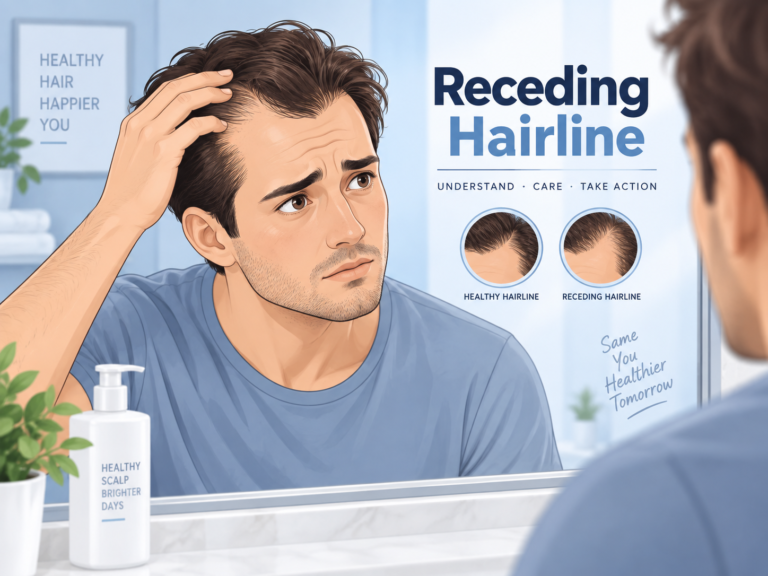
If hair fall is persistent, a widening parting or receding hairline is developing, or the scalp is becoming more visible, consider a professional assessment.
Our guide to hair fall treatment in Nagpur explains why identifying the cause matters before selecting a treatment.
Questions to Ask Before Choosing Exosomes Hair Treatment
Before deciding on an emerging hair treatment, ask the provider these practical questions:
- What is the exact product being used?
- What is its source, and how is it manufactured?
- What clinical evidence supports its use for my specific type of hair loss?
- What regulatory requirements apply to the product and its intended use?
- What are the known risks and the important uncertainties?
- What outcome can realistically be measured?
- How will my progress be monitored?
- What alternatives have stronger evidence for my diagnosis?
- What is the full cost, including follow-up?
- Who will manage any adverse reaction?
Clear answers help you make a more informed decision and avoid relying on marketing claims alone.
Hair Restoration Consultation at Trichoderm Centre, Nagpur
Choosing a hair treatment begins with understanding why hair loss is occurring. At Trichoderm Centre, Our docto provides dermatological assessment and personalised guidance for hair fall, thinning and other hair-related concerns.
Depending on the diagnosis, a treatment plan may involve established hair-loss management, appropriate scalp care or selected hair-restoration procedures. The suitability of any emerging treatment must be assessed separately, based on the available evidence, product details and applicable regulations.
Explore the clinic’s hair restoration services in Nagpur to learn more about the approach to evaluating and managing hair loss.
If you are experiencing persistent shedding or visible thinning, a consultation can help clarify the cause and the options worth considering.
Visit Trichoderm Centre in Ramdaspeth, Nagpur.
Frequently Asked Questions About Exosomes Hair Treatment
1. What is exosomes hair treatment?
Exosomes hair treatment refers to an emerging approach that uses extracellular vesicles carrying biological signals, with the aim of influencing processes involved in hair follicle activity. Its effectiveness and safety depend on the product and protocol, and stronger clinical evidence is still needed.
2. Can exosomes regrow lost hair?
Some early studies have reported improvements in certain hair measurements. However, current evidence is not strong enough to guarantee regrowth or predict results for every patient. The underlying cause and stage of hair loss matter.
3. Is exosome treatment proven for hair loss?
No. Research is promising but remains limited by small studies, varying products and treatment methods, and inconsistent follow-up. Larger, well-designed clinical trials are needed.
4. How many exosome hair treatment sessions are required?
There is no universally established session schedule. Protocols differ between studies and products, so the proposed number of sessions should be justified by the specific treatment plan and evidence.
5. Are exosomes hair treatments safe?
Their safety cannot be assumed across all products. Product quality, sterility, source, delivery method and the patient’s health all matter. Discuss known risks and uncertainties with a qualified clinician before proceeding.
6. Are exosome products approved for hair loss in India?
The status depends on the specific product and its intended use under applicable Indian regulations. Ask the provider for the product’s identity, regulatory documentation and intended-use information rather than relying on general advertising claims.
7. What is the difference between exosomes and GFC hair treatment?
Exosome-based treatments use extracellular vesicles carrying biological signals, while GFC uses concentrated growth factors prepared from the patient’s own blood. They are different approaches and should be evaluated separately according to the diagnosis and available evidence.
8. Can exosomes replace a hair transplant?
Exosome-based treatments do not transplant hair follicles. They are being investigated for their potential biological effects, while transplantation surgically moves follicles from a donor area. Their purposes and suitability differ.
9. Who should consider a consultation for hair loss?
Anyone with persistent shedding, progressive thinning, a receding hairline, a widening parting or visible scalp may benefit from a dermatological assessment. Sudden, patchy or inflamed hair loss deserves particular attention.
10. Where can I get advice about hair loss treatment in Nagpur?
You can consult Dooctor at Trichoderm Centre in Ramdaspeth, Nagpur, for assessment of hair loss and guidance on appropriate treatment options.
Conclusion
Exosomes hair treatment is an evolving area of regenerative research that may offer future possibilities for hair restoration. Early studies have reported encouraging findings, but important questions remain about clinical effectiveness, product quality, safety and long-term outcomes.
The most important step is to establish the cause of hair loss before selecting a treatment. Ask for evidence specific to the proposed product, understand the risks and regulatory status, and avoid claims of guaranteed or permanent regrowth.
If you are exploring hair-restoration options, a dermatologist can help you compare available approaches and make a decision based on your individual condition and realistic expectations.
For personalised hair-loss assessment, visit Trichoderm Centre in Ramdaspeth, Nagpur.