
Book Appointment Now
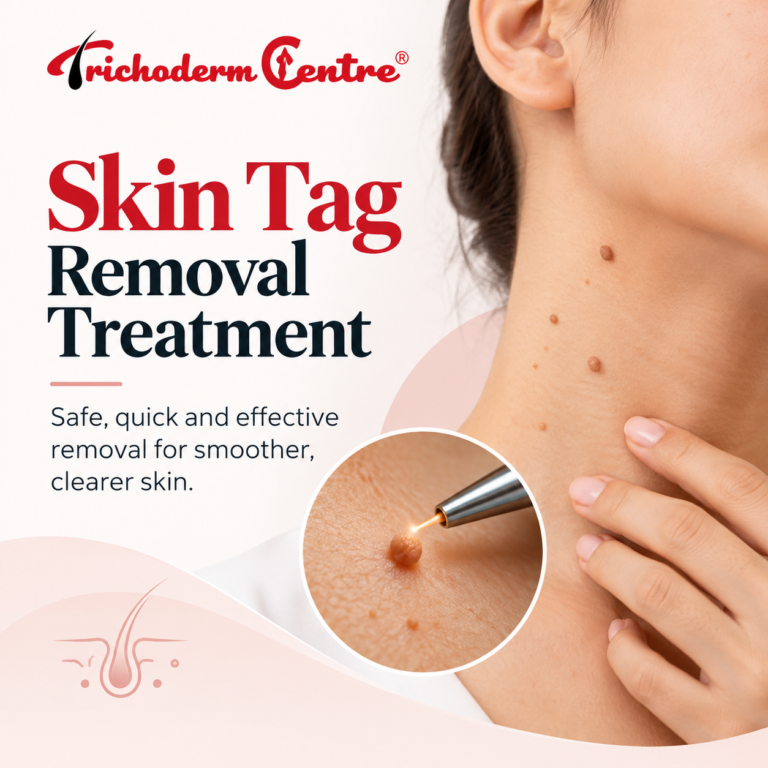
Skin Tag Removal Treatment in Nagpur – Procedure, Methods, Recovery & Aftercare
Small, soft growths on the neck, underarms, eyelids or other parts of the body can sometimes catch your attention while getting dressed, shaving or following your skincare routine. These growths may be skin tags, which are common and generally harmless.
Although skin tags usually do not require medical treatment, they can become uncomfortable when they rub against clothing or jewellery. Some people also choose to have them removed for cosmetic reasons.
If you are considering skin tag removal treatment in Nagpur, the first step is to confirm that the growth is actually a skin tag. Other skin conditions, including warts and certain moles, can sometimes look similar but may require a different approach.
At Trichoderm Centre, Dr. Shubham Singh provides personalised dermatological care based on the appearance of the skin concern, its location and the patient’s individual needs.
What Is a Skin Tag?
A skin tag, medically known as an acrochordon, is a small, benign growth made up of skin and supporting tissue. It is often soft, skin-coloured or slightly darker and may hang from the surrounding skin on a narrow stalk.
Skin tags commonly appear in areas where skin folds or experiences repeated friction.
They may be:
- Small and soft to the touch
- Skin-coloured, brownish or darker than the surrounding skin
- Smooth or slightly wrinkled
- Attached to the skin by a narrow base or stalk
- Present as a single growth or in multiple numbers
Skin tags are generally harmless and are not the same as skin cancer. However, an unfamiliar or changing growth should not automatically be assumed to be a skin tag without proper assessment.
Where Do Skin Tags Commonly Appear?
Skin tags can develop on different parts of the body, particularly in areas where skin rubs against skin or clothing.
1. Skin Tags on the Neck
The neck is one of the common locations for skin tags. Collars, necklaces and repeated skin friction may make these growths more noticeable.
2. Skin Tags in the Underarms
Underarm skin tags may catch on clothing or become irritated during shaving. Repeated friction can make an existing growth uncomfortable.
3. Skin Tags Around the Eyelids
Small growths around the eyelids may be bothersome because of their location. Any procedure near the eyes requires particular care and appropriate clinical expertise.
4. Skin Tags Under the Breasts
Skin folds beneath the breasts can experience moisture and friction, which may contribute to irritation around existing skin tags.
5. Skin Tags in the Groin and Other Skin Folds
Skin tags may also appear in the groin, upper thighs and other areas where skin surfaces rub together. Growths in these locations should be examined before treatment, especially if their appearance is unusual.
What Causes Skin Tags?
The exact reason an individual develops a skin tag is not always clear. Several factors are associated with their occurrence.
Friction Between Skin Surfaces
Repeated rubbing between skin folds or against clothing may contribute to skin tag development. This is one reason they frequently occur on the neck, underarms and groin.
Age
Skin tags become more common with age, although younger adults can develop them too.
Family History
Some people appear more prone to developing skin tags than others. A family tendency may play a role.
Metabolic Factors
Skin tags have been associated with insulin resistance and other metabolic factors in some individuals. Their presence alone, however, does not establish a diagnosis of diabetes or another metabolic condition.
If you have numerous skin tags or other health concerns, your doctor can advise whether any additional assessment is appropriate.
Are Skin Tags Dangerous?
Most typical skin tags are harmless and do not require removal for medical reasons.
However, not every raised skin growth is a skin tag. Warts, moles and other skin lesions can sometimes resemble one.
Arrange a dermatological assessment if a growth:
- Appears suddenly and looks unusual
- Changes in size, colour or shape
- Develops irregular features
- Bleeds without a clear reason
- Becomes painful
- Develops a persistent sore or crust
- Repeatedly becomes inflamed
A growth that has not been confidently identified should be examined before removal. Depending on its appearance, a doctor may recommend further assessment or laboratory examination of the removed tissue.
When Should You Consider Skin Tag Removal?
Skin tags do not always need treatment. Removal may be considered when a growth causes a practical problem or when a patient would prefer to have it removed after appropriate assessment.
Common reasons include:
- Repeated irritation from collars, jewellery or clothing
- Discomfort during shaving
- Frequent rubbing in skin folds
- Bleeding or inflammation caused by repeated trauma
- Cosmetic concerns
- Difficulty managing a growth because of its location
The decision depends on the growth’s appearance, location, symptoms and the patient’s preferences.
A dermatologist can explain whether removal is appropriate or whether observation is sufficient.
Skin Tag Removal Treatment in Nagpur: What Are the Available Methods?
The appropriate removal method depends on the size, location, attachment and appearance of the skin tag. The doctor should first confirm the diagnosis before selecting a procedure.
Depending on the individual case, professional removal may involve one of the following methods.
1. Snip Excision
Snip excision involves removing a suitable skin tag with an appropriate sterile instrument.
The area may be cleaned and local anaesthesia used when indicated, particularly for larger or more sensitive growths.
This method may be considered for selected skin tags that can be safely removed in this way. The clinician determines whether bleeding control or other measures are required.
2. Electrosurgery or Electrocautery
Electrosurgical techniques use controlled electrical energy to remove or treat selected skin growths.
Depending on the technique, the procedure may also help control bleeding. It must be performed by a trained clinician using appropriate equipment and precautions.
Suitability depends on the growth and its location. Not every lesion should be treated with this method.
3. Cryotherapy
Cryotherapy uses controlled freezing to treat certain skin lesions.
It may be suitable for selected cases, depending on the diagnosis and the clinician’s assessment. It can cause temporary discomfort, blistering or changes in skin colour, so the benefits and risks should be discussed beforehand.
Which Skin Tag Removal Method Is Best?
There is no single method that is best for every patient.
A dermatologist considers factors such as:
- The number and size of growths
- Whether the diagnosis is certain
- The location of the skin tag
- Skin tone and the risk of pigment changes
- The possibility of bleeding or scarring
- The patient’s medical history
- Whether tissue examination may be necessary
The goal is to select an appropriate method while minimising avoidable complications.
What Happens During a Skin Tag Removal Procedure?
The exact process varies according to the chosen technique, but a typical appointment may include the following steps.
Step 1: Skin Examination
The dermatologist examines the growth and checks whether its appearance is consistent with a skin tag.
If the lesion is atypical or the diagnosis is uncertain, removal may be postponed until further assessment is completed.
Step 2: Choosing the Removal Method
The doctor explains the appropriate method, expected discomfort, possible side effects and aftercare requirements.
The procedure is selected according to the growth’s characteristics and location.
Step 3: Preparing the Area
The treatment area is cleaned. Local anaesthesia may be used depending on the method, size and location of the growth.
Step 4: Removing the Skin Tag
The selected technique is used to remove or treat the growth. The duration depends on the number, size and location of the skin tags and the method chosen.
Step 5: Aftercare Instructions
The doctor provides guidance on wound care, keeping the area clean, recognising possible complications and when to return for review.
Some small skin tags may be treated during a brief appointment, but the total time varies. The clinic can advise you after assessing your specific concern.
Is Skin Tag Removal Painful?
The level of discomfort depends on the size and location of the growth and the method used.
Some procedures cause brief discomfort, while local anaesthesia can help reduce pain when needed. Mild tenderness, redness or sensitivity may occur after treatment.
Areas such as the eyelids and other sensitive locations require particular care.
Discuss any concerns about pain or anaesthesia with your dermatologist before the procedure.
Skin Tag Removal Recovery: What Should You Expect?
Recovery depends on the removal technique, the size of the treated area and individual healing characteristics.
After removal, you may notice temporary redness, mild tenderness, a small scab or a superficial wound.
General recovery guidance may include:
- Keep the treated area clean according to the clinician’s instructions.
- Avoid picking at scabs or the healing skin.
- Avoid friction or repeated irritation at the treatment site.
- Use only the wound-care products recommended by your clinician.
- Follow instructions about bathing, exercise and skincare.
- Attend a review if advised.
Do not assume that every removal method heals in the same way. Follow the specific instructions provided for your procedure.
Can Skin Tag Removal Leave a Scar?
Any procedure that removes tissue can carry some risk of a mark or scar.
The likelihood depends on the method, size and depth of treatment, location, skin characteristics and healing response.
Temporary changes in skin colour may also occur, particularly in skin that is prone to post-inflammatory pigmentation.
A dermatologist can explain the likely cosmetic outcome and discuss ways to reduce avoidable irritation during recovery. However, no procedure can guarantee a completely mark-free result.
Can Skin Tags Grow Back After Removal?
A skin tag that has been completely removed generally does not grow back in exactly the same spot. However, new skin tags can develop in the same area or elsewhere over time.
Removing an existing skin tag does not eliminate the tendency to develop additional ones.
If a growth returns quickly or looks different from the original lesion, have it examined rather than assuming it is another skin tag.
Can You Remove Skin Tags at Home?
It is best to avoid cutting, tying off, burning or applying unverified chemical products to a skin tag at home.
Home removal can cause:
- Bleeding
- Infection
- Burns or chemical injury
- Scarring
- Changes in skin pigmentation
- Incomplete removal
- Delayed diagnosis of a different skin lesion
Over-the-counter products marketed for warts or other growths may not be appropriate for skin tags, particularly on the face, eyelids or skin folds.
If you are unsure what a growth is, have it assessed before attempting any removal.
Skin Tags vs Warts vs Moles: What Is the Difference?
These growths may sometimes look similar, but they are different conditions.
Skin Tags
Skin tags are usually soft, benign growths that may hang from a narrow stalk. They commonly occur in skin folds and are not contagious.
Warts
Warts are caused by certain types of human papillomavirus (HPV). They may feel rough or firm and can spread to other areas or people through direct or indirect contact.
Moles
Moles are collections of pigment-producing cells. They can be flat or raised and may vary in colour. A changing or unusual mole should be assessed before any cosmetic removal is considered.
Because visual similarities can be misleading, a dermatologist should identify the growth before treatment. A removal method suitable for one type of lesion may not be appropriate for another.
How to Care for Your Skin After Skin Tag Removal
Good aftercare helps protect the treated area while it heals.
Keep the Area Clean
Follow your clinician’s instructions for cleaning the site. Avoid harsh scrubbing or using strong skincare products directly on a healing wound.
Avoid Picking or Scratching
Picking at the treated area may delay healing and increase the risk of infection or scarring.
Protect Healing Skin
If the treated area is exposed to sunlight, follow your clinician’s advice on protecting it while it heals and after the wound has closed.
Watch for Warning Signs
Seek medical advice if you notice increasing pain, spreading redness, worsening swelling, pus, fever or bleeding that does not stop with appropriate pressure.
Contact the clinic if healing does not progress as expected.
Why Choose a Dermatologist for Skin Tag Removal?
The first priority is confirming that the growth is actually a skin tag. A professional assessment also helps determine whether removal is necessary and which method is appropriate.
A dermatologist can assess:
- The nature of the skin growth
- The safest approach for its location
- Whether local anaesthesia is appropriate
- The risk of bleeding, scarring or pigment changes
- Whether tissue examination is needed
- The aftercare required for proper healing
At Trichoderm Centre, treatment planning is based on individual assessment and realistic expectations. You can explore the clinic’s Medical Dermatology services to learn more about its dermatological care.
You can also learn more about Dr. Shubham Singh and Trichoderm Centre.
Skin Tag Removal Treatment at Trichoderm Centre, Nagpur
If you have a skin growth that catches on clothing, becomes irritated or concerns you cosmetically, a dermatological consultation can help determine whether it is a skin tag and whether removal is appropriate.
Trichoderm Centre is located in Ramdaspeth, Nagpur, and provides care for a range of skin, hair and dermatological concerns.
During your consultation, the doctor can examine the growth, discuss suitable options and explain the expected recovery and aftercare based on your individual needs.
For appointment enquiries, visit the Trichoderm Centre contact page.
Frequently Asked Questions About Skin Tag Removal
1. Is skin tag removal safe?
Skin tag removal is generally a straightforward procedure when the growth has been correctly identified and the method is appropriate. As with any procedure, possible risks include bleeding, infection, scarring and changes in skin colour.
2. How much does skin tag removal cost in Nagpur?
The cost depends on the number, size and location of the growths, the removal method and whether additional assessment is required. Contact the clinic for an estimate after discussing your specific concern.
3. Can skin tags be removed from the face and neck?
Selected skin tags can be removed from areas such as the face and neck after examination. Growths near the eyes or other sensitive areas require particular care and appropriate clinical expertise.
4. How long does skin tag removal take?
The procedure time varies with the number, size and location of the skin tags and the method used. Your dermatologist can provide a more realistic estimate after examination.
5. Will the skin tag leave a mark after removal?
A temporary mark or scar is possible. The outcome depends on the technique, location, skin characteristics and healing response. A completely mark-free result cannot be guaranteed.
6. Can I remove a skin tag with a wart-removal product?
Wart-removal products are not automatically suitable for skin tags. Some contain ingredients that can damage surrounding skin. Avoid using them unless a qualified clinician has specifically advised that the product is appropriate.
7. Do skin tags mean I have diabetes?
No. Skin tags alone do not diagnose diabetes. Multiple skin tags have been associated with metabolic factors in some people, but any need for further testing should be determined from your overall health and medical history.
8. Do skin tags grow back after removal?
A completely removed skin tag generally does not grow back at the exact same site, but new skin tags may develop elsewhere. A returning or changing growth should be examined.
9. Should every skin tag be removed?
No. Most typical skin tags are harmless and do not require removal. Treatment may be considered when they cause irritation, discomfort or cosmetic concern, or when a clinician recommends it after assessment.
10. Where can I get skin tag removal treatment in Nagpur?
You can contact Trichoderm Centre in Ramdaspeth, Nagpur, to enquire about a dermatological assessment. The doctor can confirm the nature of the growth and explain the available options.
Final Thoughts
Skin tags are common, usually harmless growths that may become bothersome because of friction, their location or cosmetic concerns. Although removal can be considered, the first step is confirming that the growth is actually a skin tag.
Professional assessment helps determine the appropriate removal method, explain possible risks and provide suitable aftercare guidance.
If you are considering skin tag removal treatment in Nagpur, consult a dermatologist to understand your options and make an informed decision.
Visit Trichoderm Centre in Ramdaspeth, Nagpur, for a personalised dermatological assessment.