Book Appointment Now
Acne Scars Treatment in Nagpur: Types, Causes & Treatment Options
Acne may eventually settle, but the marks and scars it leaves behind can remain visible long after the active breakout has healed.
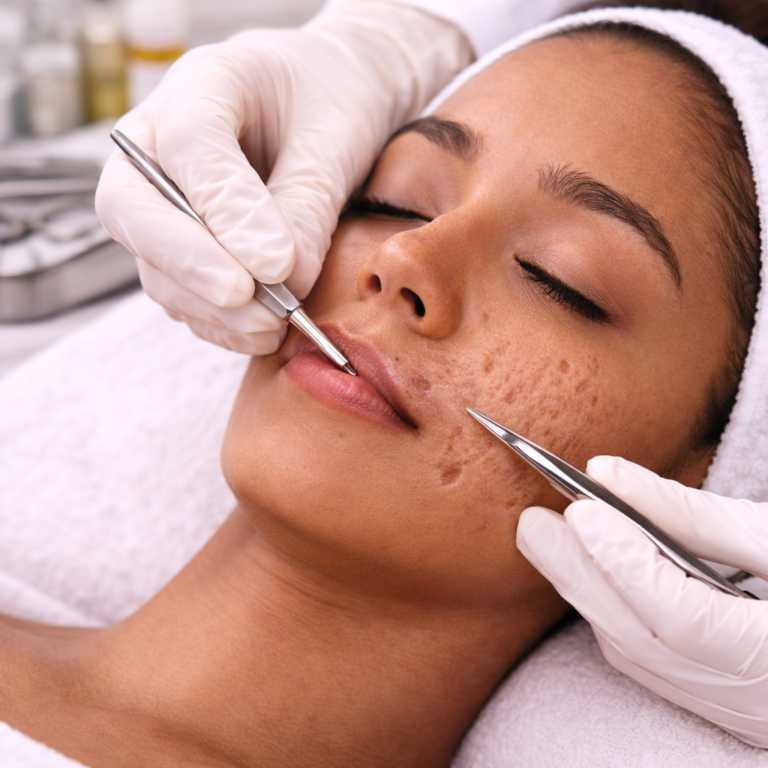
Some people develop flat dark marks, while others develop depressions, uneven texture or deeper scars. Because these changes are different, the right acne scars treatment in Nagpur depends on identifying exactly what type of scar or mark is present.
Acne Marks and Acne Scars Are Not the Same
One of the most important things to understand is the difference between an acne mark and an acne scar.
Acne Marks
After acne heals, a flat red, brown or darker area may remain on the skin.
These marks involve a change in colour rather than a permanent change in skin structure.
Some acne marks gradually improve over time, although the speed of fading varies between individuals.
Acne Scars
True acne scars involve a change in the texture or structure of the skin.
They may appear as:
- Small deep pits
- Wider depressions
- Rolling or uneven skin
- Raised scars in selected cases
Because acne scars affect skin structure, their treatment is different from the treatment of pigmentation alone.
If you are still experiencing active breakouts, read our guide on Acne Treatment in Nagpur before focusing only on scars.
Why Do Acne Scars Develop?
Not everyone who develops acne will develop scars.
The risk can increase when acne causes significant inflammation or affects deeper layers of the skin.
Factors that may contribute include:
Severe Inflammatory Acne
Deep or painful acne lesions can cause more damage to the surrounding skin tissue.
Delayed Acne Treatment
Persistent inflammatory acne that remains uncontrolled for a long period may increase the risk of scarring.
Picking or Squeezing Pimples
Repeatedly squeezing, scratching or picking acne can increase inflammation and damage the skin.
Individual Healing Response
Different people’s skin heals differently. Some individuals may be more prone to developing scars than others.
Severity and Duration of Acne
Repeated breakouts in the same area can contribute to long-term textural changes.
What Are the Different Types of Acne Scars?
Identifying the type of scar is important because one procedure does not work equally well for every acne scar.
1. Ice Pick Scars
Ice pick scars are narrow but relatively deep depressions.
They may look like small holes or punctures in the skin.
Because of their depth, they may require a different treatment strategy from wider, shallower scars.
2. Boxcar Scars
Boxcar scars are wider depressions with more defined edges.
They can vary in depth and may give the skin a pitted appearance.
3. Rolling Scars
Rolling scars can create an uneven or wave-like skin texture.
They occur when underlying changes pull the skin downward.
4. Raised Acne Scars
Some patients develop raised or thickened scars rather than depressions.
These require a different treatment approach and should be assessed separately.
What About Dark Marks After Acne?
Dark marks left behind after acne are often referred to as post-inflammatory pigmentation.
These marks may become more noticeable after sun exposure and can persist for weeks or months depending on skin type and the depth of pigmentation.
Treatment for pigmentation may differ from treatment for true acne scars.
Depending on the skin condition, dermatologist-guided Chemical Peel Treatments or other aesthetic dermatology approaches may be considered.
Why Should Active Acne Be Treated Before Acne Scars?
Treating acne scars while new inflammatory acne continues to appear can be counterproductive.
New breakouts can create additional marks and scars.
This is why acne-scar management usually starts by checking whether active acne is adequately controlled.
Trichoderm Centre provides Medical Dermatology for active acne and other medical skin concerns.
Once the acne is better controlled, the dermatologist can focus more specifically on residual scars, pigmentation and texture.
How Are Acne Scars Evaluated?
A dermatologist may assess:
- Type of scar
- Depth of scars
- Number of scars
- Areas affected
- Skin type
- Existing pigmentation
- Presence of active acne
- Previous acne treatments
- Previous scar procedures
- Individual healing response
Many patients have more than one type of scar at the same time.
For this reason, acne-scar treatment often needs to be personalised rather than based on one standard procedure.
Can Acne Scars Disappear Naturally?
Some post-acne marks can gradually fade.
True structural acne scars, however, generally behave differently because the texture of the skin has changed.
The degree of improvement that can be achieved depends on:
- Scar type
- Scar depth
- Age of the scar
- Skin type
- Treatment selected
- Individual healing response
The goal should usually be realistic improvement rather than expecting every scar to disappear completely.
What Treatments May Be Considered for Acne Scars?
There is no single best acne-scar treatment for every patient.
A dermatologist may recommend one procedure or a combination depending on the type and depth of scarring.
Chemical Peels
Chemical peels involve applying a controlled solution to the skin to produce a planned exfoliating effect.
For selected patients, they may be considered as part of a treatment plan for concerns such as:
- Post-acne pigmentation
- Superficial texture irregularities
- Uneven skin tone
- Acne-prone skin
Learn more about Chemical Peel Treatments at Trichoderm Centre.
Not every acne scar is suitable for treatment with a chemical peel alone.
Microneedling-Based Treatments
Microneedling creates controlled micro-injuries in the skin to stimulate the skin’s natural repair processes.
It may be considered for selected types of acne scars and uneven skin texture.
The suitability of microneedling depends on:
- Scar type
- Scar depth
- Active acne
- Skin sensitivity
- Pigmentation tendency
- Individual skin condition
A dermatologist should evaluate the skin before recommending the procedure.
Laser and Aesthetic Dermatology
Selected laser or aesthetic procedures may be considered depending on the type of scar, pigmentation and overall skin condition.
Different technologies serve different purposes, which is why treatment should be selected according to the scar rather than simply choosing a laser by name.
Explore Aesthetic and Laser Dermatology at Trichoderm Centre.
Do Acne Scars Require Combination Treatment?
Sometimes.
A patient may simultaneously have:
- Deep scars
- Shallow scars
- Uneven texture
- Dark marks
- Active acne
One treatment may not address all of these concerns equally well.
A dermatologist may therefore develop a staged plan that first controls acne and then addresses pigmentation and different scar types appropriately.
How Many Acne Scar Treatment Sessions Are Required?
The number of sessions varies considerably.
It may depend on:
- Type of scars
- Scar depth
- Number of scars
- Procedure selected
- Skin response
- Treatment goals
Deeper or mixed acne scars may require multiple treatment sessions.
An exact treatment schedule should therefore be planned after examining the skin.
How Long Does It Take to See Improvement?
Acne-scar improvement generally occurs gradually.
Procedures that rely on skin remodelling require time for the skin’s repair processes to occur.
The dermatologist should explain:
- Expected recovery
- Approximate treatment schedule
- Aftercare
- When changes may begin to become visible
Results differ between patients, so comparing your timeline directly with another person’s results may be misleading.
Does Acne Scar Treatment Have Downtime?
Downtime depends on the procedure being performed.
Some treatments may cause temporary:
- Redness
- Mild swelling
- Dryness
- Peeling
- Sensitivity
More intensive procedures may require a longer recovery period.
Your dermatologist should explain the expected downtime before treatment.
Why Is Sun Protection Important During Acne Scar Treatment?
Sun exposure can make post-acne pigmentation more noticeable and may affect recovery after certain skin procedures.
Appropriate sun protection is therefore an important part of acne and scar care.
Patients undergoing dermatologist-guided treatments should follow the specific aftercare recommendations provided for their procedure.
Can Home Remedies Remove Acne Scars?
Home remedies are unlikely to substantially change established structural acne scars.
Some general skincare measures can support healthier skin, but deep or textural scars usually require professional assessment if treatment is desired.
Applying strong acids, abrasive ingredients or unregulated products at home can also irritate the skin and worsen pigmentation.
Can Skincare Products Remove Deep Acne Scars?
Skincare can play an important role in:
- Controlling acne
- Supporting the skin barrier
- Managing pigmentation
- Maintaining overall skin health
However, topical skincare alone may have limited ability to correct deeper structural scars.
This is why it is important to distinguish between acne pigmentation and true scarring.
Common Mistakes During Acne Scar Treatment
Treating Scars While Acne Is Still Uncontrolled
New acne can continue producing new scars.
Expecting One Procedure to Treat Every Scar
Different scar types respond differently.
Choosing Treatment Based Only on Price
The treatment should be chosen according to the scar type and skin condition.
Picking New Pimples
Continuing to squeeze active acne can create additional marks and scars.
Ignoring Sun Protection
Sun exposure may worsen pigmentation after acne.
Expecting Completely Scar-Free Skin
Treatment aims to improve the appearance and texture of scars. Complete removal of every scar may not be realistic.
How to Choose an Acne Scar Doctor in Nagpur
When searching for acne scars treatment in Nagpur, consider the overall dermatological approach.
Proper Scar Assessment
The dermatologist should identify the type and depth of scars before recommending treatment.
Active Acne Management
Current acne should be addressed so that new scars are not continuously developing.
Personalised Treatment
The same procedure should not automatically be recommended for every scar type.
Multiple Treatment Options
A broader range of dermatological procedures allows treatment to be selected according to individual requirements.
Realistic Expectations
A responsible treatment plan should explain expected improvement, number of sessions and downtime.
Acne Scars Treatment in Nagpur at Trichoderm Centre
With 8+ years of experience and 10,000+ patients treated, the clinic focuses on personalised, safe and evidence-based dermatology.
Depending on the skin assessment, treatment may involve Medical Dermatology, Chemical Peel Treatments or selected Aesthetic and Laser Dermatology approaches.
Visit Trichoderm Centre in Nagpur
If acne has left dark marks, depressions or uneven skin texture, the first step is identifying whether you are dealing with pigmentation, true scarring or both.
Get Directions to Trichoderm Centre on Google Maps
You can also book a consultation at Trichoderm Centre for personalised acne and acne-scar evaluation.
Frequently Asked Questions About Acne Scars
Are acne marks and acne scars the same?
No. Acne marks usually involve changes in skin colour, while true acne scars involve changes in skin texture or structure.
Can acne scars disappear completely?
The degree of improvement depends on scar type, depth, treatment and individual skin response. Complete removal of every scar may not always be realistic.
Should active acne be treated before acne scars?
Usually, controlling active inflammatory acne is important because continuing breakouts can create new scars.
Can Chemical Peels help acne scars?
Selected chemical peels may help concerns such as post-acne pigmentation and superficial texture, but they are not suitable for every type of acne scar.
How many sessions are needed for acne scars?
The number of treatment sessions depends on the type and depth of scars, procedure selected and individual response.
Can deep acne scars be treated with creams alone?
Topical skincare has limited ability to correct established deep structural scars. Professional evaluation can help determine appropriate options.
Which doctor should I consult for acne scars?
A dermatologist can evaluate acne scars, active acne, pigmentation and skin texture and recommend appropriate treatment.
Start with the Right Acne Scar Diagnosis
Acne scars are not all the same.
Some concerns are mainly pigmentation, while others involve genuine structural changes in the skin. A patient may also have several scar types simultaneously.
The most effective treatment strategy therefore begins by understanding the scar rather than selecting a procedure first.