Book Appointment Now
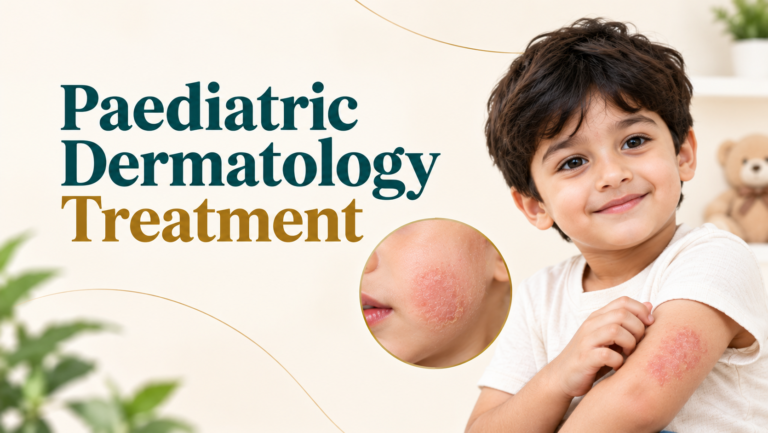
Paediatric Dermatology in Nagpur: Common Skin Problems in Children & When to See a Dermatologist
Children can develop a wide range of skin problems as their skin changes throughout infancy, childhood and adolescence. Some conditions are temporary and improve with basic care, while others may need evaluation and treatment by a dermatologist.
Common concerns can include eczema, skin infections, warts, birthmarks, rashes, allergies, acne and changes in pigmentation. Because several childhood skin conditions can look similar, identifying the underlying cause is often more useful than repeatedly trying different creams.
Paediatric dermatology focuses on the diagnosis and management of skin, hair and nail concerns in infants, children and adolescents.
If you are looking for paediatric dermatology in Nagpur, a dermatologist can assess your child’s skin condition and recommend an age-appropriate treatment plan.
Trichoderm Centre provides dermatological care for children and adolescents as part of the clinic’s Medical Dermatology services.
What Is Paediatric Dermatology?
Paediatric dermatology is the area of dermatology concerned with skin, hair and nail conditions affecting children and adolescents.
Children’s skin is not simply smaller adult skin. Skin conditions may appear differently depending on a child’s age, and treatment needs to take the child’s age, skin sensitivity and individual circumstances into account.
Trichoderm Centre’s Medical Dermatology services specifically include Paediatric Dermatology for infants, children and adolescents with concerns such as birthmarks, eczema, infections, warts and acne.
What Skin Problems Can Affect Children?
Children can experience many different dermatological conditions.
Some common concerns include:
- Eczema
- Skin infections
- Warts
- Molluscum contagiosum
- Birthmarks
- Acne
- Skin allergies
- Rashes
- Pigmentation changes
- Fungal infections
- Viral skin infections
- Nail problems
- Scalp and hair concerns
Not every rash or bump requires treatment. However, persistent, spreading, painful or unusual skin changes should be assessed.
1. Eczema in Children
Eczema, particularly atopic dermatitis, is common during childhood.
It can cause:
- Dry skin
- Itching
- Redness
- Rough patches
- Scaling
- Irritation
- Recurrent flare-ups
Childhood eczema can look different at different ages. The condition may also improve and flare periodically.
The American Academy of Dermatology notes that eczema is common in children and that appropriate skin care, moisturising and dermatologist-guided treatment can help control symptoms.
When Should a Child With Eczema See a Dermatologist?
Consider professional evaluation if:
- Itching is persistent
- The child is scratching frequently
- Sleep is being disturbed
- The skin is becoming cracked
- Flare-ups keep returning
- The rash is spreading
- The skin appears infected
- Basic skin care is not helping
Treatment for childhood eczema should be appropriate for the child’s age and severity of symptoms.
2. Skin Infections in Children
Children can develop different types of skin infections.
These may include:
- Fungal infections
- Viral infections
- Bacterial infections
A skin infection may cause redness, itching, scaling, bumps, blisters, crusting or other changes.
Because different infections require different treatments, it is not advisable to assume that every itchy or red rash is fungal.
A dermatologist can examine the affected area and determine the likely cause before recommending treatment.
3. Warts in Children
Warts are common skin growths caused by certain types of human papillomaviruses.
They may appear on:
- Hands
- Fingers
- Feet
- Knees
- Other areas of the skin
Some warts disappear without treatment, while others may persist, multiply or become uncomfortable.
Treatment may be considered when warts:
- Are painful
- Keep spreading
- Bleed
- Interfere with daily activities
- Cause significant concern
- Do not improve over time
A dermatologist can determine whether treatment is necessary and which approach may be appropriate for the child’s age and the location of the wart.
4. Molluscum Contagiosum
Molluscum contagiosum is a viral skin infection that is particularly common in children.
It can produce small, smooth bumps that may be skin-coloured, pink or lighter.
The American Academy of Dermatology notes that molluscum is especially common in children between 1 and 10 years old. It can spread through skin-to-skin contact or contaminated items.
Many healthy children eventually clear molluscum without treatment, although this can take months.
Treatment may be considered in certain situations, including when bumps are bothersome, infected, associated with eczema or likely to spread significantly.
5. Birthmarks in Children
Birthmarks are common and can have different appearances.
They may be:
- Brown
- Red
- Pink
- Blue
- White
- Pigmented
- Raised or flat
Many birthmarks are harmless.
However, a dermatologist may recommend evaluating a birthmark to determine what type it is and whether monitoring or treatment is appropriate.
The American Academy of Dermatology recommends having a child’s birthmark examined so parents can understand what it is and whether treatment or precautions are needed.
When Should a Birthmark Be Checked?
Consider dermatological evaluation if a birthmark:
- Appears to be growing rapidly
- Changes significantly
- Bleeds
- Becomes painful
- Develops unusual features
- Is located near the eye, mouth or another sensitive area
- Is one of many unusual pigmented spots
Most birthmarks do not require treatment, but proper identification is useful.
6. Acne in Children and Teenagers
Acne becomes particularly common during adolescence as hormonal changes affect the skin.
It may include:
- Blackheads
- Whiteheads
- Pimples
- Inflamed bumps
- Deeper lesions
- Acne marks
- Acne scars
Teenage acne should not automatically be treated with the same products used by adults.
The severity and type of acne should be considered when selecting treatment.
Persistent or inflammatory acne may benefit from dermatologist-led care, particularly when it is beginning to leave marks or scars.
Trichoderm Centre already provides dedicated Acne Treatment in Nagpur content and Medical Dermatology care for acne. The new paediatric article should support, rather than compete with, that dedicated acne topic.
7. Skin Allergies and Recurring Rashes
Children can develop rashes due to:
- Allergic reactions
- Irritants
- Eczema
- Infections
- Insect bites
- Other inflammatory skin conditions
A rash can sometimes look similar to another condition even when the underlying cause is different.
A child should be assessed when a rash:
- Keeps returning
- Spreads
- Causes significant itching
- Becomes painful
- Causes swelling
- Develops blisters
- Does not improve
- Is associated with other unusual symptoms
Repeatedly changing creams without identifying the cause may make it harder to understand what is actually happening.
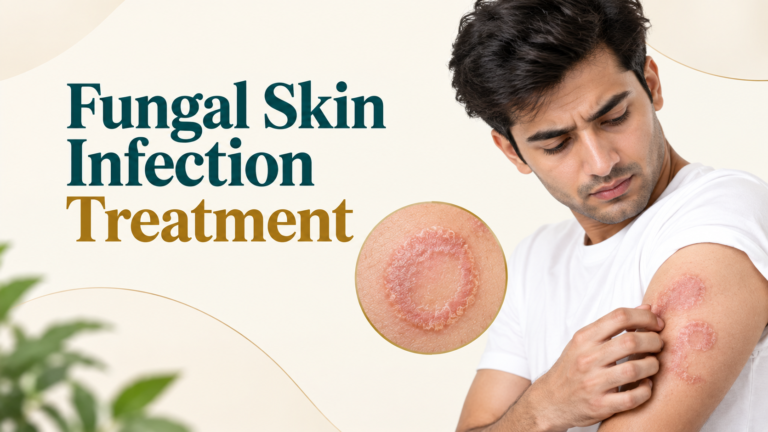
8. Fungal Skin Infections in Children
Fungal infections can affect children’s skin, scalp and nails.
Possible symptoms include:
- Itching
- Scaling
- Circular patches
- Red or darker areas
- Peeling
- Hair loss when the scalp is involved
The appearance of a fungal infection can vary depending on the affected body area.
Scalp infections deserve particular attention because they can involve hair loss and generally require medical treatment rather than relying only on topical creams.
A dermatologist can distinguish a suspected fungal infection from eczema, dermatitis and other conditions that may look similar.
9. Pigmentation Changes in Children
Changes in skin colour can have different causes.
Children may develop:
- Darker patches
- Lighter patches
- Post-inflammatory pigmentation
- Birthmarks
- Other pigment-related conditions
Not every light or dark patch represents a serious condition.
However, a new or changing patch should be evaluated when it:
- Continues to enlarge
- Multiplies
- Changes rapidly
- Is associated with itching or inflammation
- Has an unusual appearance
The diagnosis determines whether treatment is required.
10. Scalp and Hair Problems in Children
Children can also develop scalp and hair concerns.
These may include:
- Persistent dandruff
- Scalp infections
- Hair breakage
- Patchy hair loss
- Scalp inflammation
- Other causes of reduced hair density
Hair loss in a child should not automatically be attributed to stress or poor nutrition.
A dermatologist can assess the scalp, hair pattern and medical history to determine what may be causing the problem.
Why Is Diagnosis Important in Children’s Skin Problems?
Many childhood skin conditions can look similar.
For example, an itchy rash may be related to:
- Eczema
- Allergy
- Fungal infection
- Irritation
- Another inflammatory condition
Similarly, bumps can be caused by:
- Warts
- Molluscum
- Acne
- Insect bites
- Other skin conditions
The treatment depends on the underlying cause.
This is why a child with a persistent or unusual skin problem may benefit from a dermatological assessment rather than repeated experimentation with over-the-counter products.
What Happens During a Paediatric Dermatology Consultation?
A consultation generally begins with understanding the child’s symptoms and medical history.
The dermatologist may ask about:
- When the problem started
- Whether it is spreading
- Previous treatments
- Itching or pain
- Recent illnesses
- Family history
- Existing skin conditions
- Possible environmental triggers
- Changes in skincare products
The child’s skin, scalp, hair or nails can then be examined.
If required, additional tests may be recommended depending on the suspected condition.
The goal is to establish the likely diagnosis before deciding whether treatment is necessary.
How Is Treatment Planned for Children?
Treatment depends on:
- The child’s age
- The diagnosis
- Severity
- Location
- Extent of the condition
- Previous treatment
- Individual medical factors
Children may require different formulations, strengths or treatment schedules from adults.
The aim is to use an appropriate treatment approach while avoiding unnecessary medication or procedures.
For childhood eczema, for example, dermatologists may combine skin care, moisturisation, medication when required and trigger management.
Should Parents Use Adult Skincare Products on Children?
Not automatically.
Children’s skin can be more sensitive, and some active ingredients used in adult skincare may not be appropriate for younger children.
Parents should be particularly careful with:
- Strong exfoliating products
- Multiple active ingredients
- Acne medications
- Steroid creams
- Bleaching or lightening products
- Essential oils
- Unverified home remedies
For example, the American Academy of Dermatology advises parents not to apply acne medication to a child’s skin unless a dermatologist recommends it, particularly in younger children.
When in doubt, ask a dermatologist or the child’s paediatrician before starting a medicated skincare product.
Simple Skin Care Tips for Children
A simple skincare routine is often more appropriate than using numerous products.
Use Gentle Cleansers
Choose a mild cleanser appropriate for the child’s age and skin condition.
Moisturise When Needed
Children with dry or eczema-prone skin may benefit from regular moisturisation.
For childhood eczema, dermatologists commonly recommend moisturisers and gentle skin care as part of management.
Avoid Excessive Fragrance
Fragranced products can irritate sensitive skin in some children.
Protect the Skin From Excessive Sun Exposure
Use appropriate sun-protection measures according to the child’s age and circumstances.
Avoid Scratching
Keep nails short and smooth if your child frequently scratches an itchy area.
Do Not Share Personal Items
Towels, combs, clothing and other personal items should not be shared when a contagious skin condition is suspected.
When Should You Take Your Child to a Dermatologist?
Consider consulting a dermatologist if your child’s skin problem:
- Persists for several weeks
- Keeps returning
- Spreads to other areas
- Causes significant itching
- Causes pain or swelling
- Produces persistent scaling
- Causes hair loss
- Does not improve with basic care
- Changes rapidly
- Appears unusual or difficult to identify
A dermatologist can determine whether the condition requires treatment, monitoring or reassurance.
Paediatric Dermatology in Nagpur at Trichoderm Centre
Trichoderm Centre provides paediatric dermatology in Nagpur as part of its Medical Dermatology services.
The clinic’s Medical Dermatology page specifically includes paediatric care for infants, children and adolescents with concerns such as:
- Birthmarks
- Eczema
- Skin infections
- Warts
- Acne
- Persistent skin concerns
The approach is child-friendly and focuses on age-appropriate treatment planning.
Paediatric Dermatologist in Ramdaspeth, Nagpur
If you are looking for a paediatric dermatologist in Ramdaspeth, Trichoderm Centre provides dermatology care for children and adolescents as part of its broader skin, hair and nail services.
The Dermatologist in Ramdaspeth page also identifies paediatric dermatological concerns among the conditions managed at the clinic.
For children with persistent or unusual skin problems, proper diagnosis can help determine whether the condition needs treatment or simply monitoring.
Get Directions to Trichoderm Centre
Trichoderm Centre is located in Ramdaspeth, Nagpur.
Frequently Asked Questions About Paediatric Dermatology
What does a paediatric dermatologist treat?
A paediatric dermatologist evaluates skin, hair and nail conditions in infants, children and adolescents. Common concerns include eczema, infections, warts, birthmarks, acne and persistent rashes.
When should I take my child to a dermatologist?
Consider an evaluation when a skin problem persists, keeps returning, spreads, causes significant discomfort or does not improve with basic care.
Can children develop eczema?
Yes. Eczema is common in children and can cause dry, itchy and irritated skin. Management depends on the child’s symptoms and severity.
Are birthmarks in children dangerous?
Most birthmarks are harmless, but a dermatologist can identify the type of birthmark and determine whether it needs monitoring or treatment.
Can children get fungal skin infections?
Yes. Fungal infections can affect children’s skin, scalp and nails. Scalp infections in particular should be evaluated by a dermatologist.
What are the small bumps commonly seen in children?
Several conditions can cause bumps, including molluscum contagiosum, warts, acne and other rashes. The appearance alone may not be enough to identify the cause.
Can children get acne?
Yes. Acne can occur during adolescence and sometimes earlier. Persistent or inflammatory acne should be assessed rather than treated with adult skincare products without guidance.
Should I use adult skincare products on my child?
Not without checking whether they are appropriate for the child’s age and condition. Some active ingredients may irritate young or sensitive skin.
Can childhood skin problems go away on their own?
Some do, while others require treatment or monitoring. The expected course depends on the diagnosis.
Where can I get paediatric dermatology in Nagpur?
Trichoderm Centre provides paediatric dermatology care in Nagpur, including evaluation of childhood eczema, infections, warts, birthmarks, acne and other persistent skin concerns.
Conclusion
Children can develop many different skin conditions, from eczema and infections to warts, birthmarks, acne and recurring rashes.
Some concerns may resolve naturally, while others require medical treatment or monitoring. Because several childhood skin conditions can look similar, identifying the underlying cause is an important first step.
Paediatric dermatology focuses on providing age-appropriate evaluation and treatment rather than simply adapting adult skincare approaches for children.
If your child has a persistent, recurring, spreading or unusual skin concern, a dermatologist can help determine what is causing it and whether treatment is needed.
For paediatric dermatology in Nagpur or Ramdaspeth, you can consult at Trichoderm Centre.