Book Appointment Now
Melasma Treatment in Nagpur: Causes, Triggers & Treatment Options
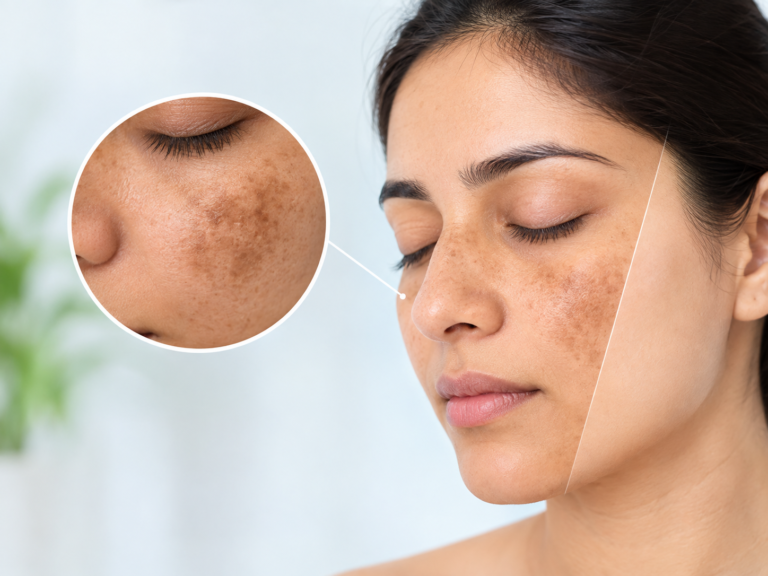
Brown or grey-brown patches on the cheeks, forehead, nose or upper lip may be more than ordinary tanning. In some people, these patches are caused by melasma, a common pigmentation condition that can become more noticeable with sun exposure and other triggers.
If you are looking for melasma treatment in Nagpur, the first step is identifying whether the pigmentation is actually melasma and understanding the factors that may be making it worse.
What Is Melasma?
Melasma is a pigmentation condition that causes darker patches to develop on the skin, particularly on the face.
It commonly appears on areas such as:
- Cheeks
- Forehead
- Upper lip
- Nose
- Chin
The patches are often symmetrical, meaning similar pigmentation may appear on both sides of the face.
Melasma is not dangerous, but it can be persistent and may repeatedly become darker when triggering factors are present.
What Does Melasma Look Like?
Melasma usually appears as flat areas of brown, tan or grey-brown pigmentation.
Unlike acne scars, melasma generally changes the colour of the skin rather than creating depressions or changes in texture.
You may notice:
- Uneven brown patches
- Symmetrical pigmentation
- Darkening after sun exposure
- Pigmentation becoming more obvious during certain periods
- Patches gradually returning after previous improvement
Because several pigmentation conditions can look similar, proper diagnosis is important.
What Causes Melasma?
There is no single cause of melasma.
Several factors may contribute to its development or worsening.
Sun Exposure
Sun exposure is one of the most important factors associated with pigmentation.
Ultraviolet exposure can stimulate melanin production and make melasma appear darker.
This is why sun protection is an essential part of managing melasma.
Hormonal Factors
Hormonal changes may contribute to melasma in some people.
This is one reason melasma may develop or become more noticeable during certain life stages.
Genetic Tendency
Some people may be more genetically prone to developing melasma.
A family history of pigmentation problems may increase susceptibility.
Heat and Environmental Exposure
For some patients, repeated environmental exposure may contribute to worsening pigmentation.
Skin Irritation
Aggressive skincare, unsuitable products or excessive procedures may irritate the skin and make pigmentation more noticeable.
Is Melasma the Same as Hyperpigmentation?
Melasma is a type of hyperpigmentation, but not every dark spot is melasma.
Hyperpigmentation is a broader term that includes:
- Post-acne marks
- Sun spots
- Pigmentation after inflammation
- Melasma
- Uneven skin tone
This distinction is important because the treatment approach may differ.
For a broader understanding of pigmentation concerns, read our guide on Pigmentation Treatment in Nagpur.
Melasma vs Post-Acne Pigmentation
Post-acne pigmentation occurs after an inflamed acne lesion heals.
Melasma usually develops as broader patches rather than individual marks left by pimples.
If active acne or acne-related pigmentation is also present, read our guide on Acne Treatment in Nagpur.
Patients with textural acne scars may need a separate assessment because acne scars and pigmentation require different treatment approaches.
Why Does Melasma Keep Coming Back?
Melasma can be persistent because the factors responsible for pigmentation may continue even after the skin initially improves.
Recurrence may occur because of:
- Continued sun exposure
- Inadequate sun protection
- Hormonal influences
- Heat or environmental triggers
- Skin irritation
- Stopping maintenance treatment
- Individual tendency toward pigmentation
For this reason, melasma management often involves both treating existing pigmentation and preventing new darkening.
When Should You See a Dermatologist for Melasma?
Consider consulting a dermatologist when:
- Facial pigmentation continues increasing
- Patches keep returning
- Pigmentation does not improve with basic skincare
- You are unsure whether the condition is melasma
- Multiple brightening products are irritating your skin
- Pigmentation has become significantly darker
- You want to explore dermatologist-guided procedures
A dermatologist in Nagpur can examine the pigmentation pattern and recommend a treatment strategy based on your skin.
How Is Melasma Diagnosed?
Melasma is generally assessed clinically.
The dermatologist may evaluate:
- Location of pigmentation
- Colour and pattern
- Symmetry
- Skin type
- Duration of pigmentation
- Sun exposure
- Hormonal history where relevant
- Previous treatments
- Current skincare routine
- Response to previous treatments
The dermatologist may also consider whether another pigmentation condition is present.
Why Diagnosis Matters Before Melasma Treatment
Not every dark patch on the face is melasma.
For example, pigmentation may result from:
- Acne
- Sun damage
- Skin irritation
- Inflammation
- Certain medical conditions
- Previous procedures
Using the wrong treatment may provide little improvement or cause irritation.
This is why melasma treatment should begin with diagnosis rather than choosing a brightening product or procedure first.
What Are the Treatment Options for Melasma?
There is no single treatment that works identically for every person.
A dermatologist-led plan may involve several approaches depending on the condition.
Medical Skincare
Dermatologist-guided skincare may be recommended to help manage pigment production and improve uneven skin tone.
The exact products used depend on:
- Skin sensitivity
- Pigmentation depth
- Previous treatments
- Existing skincare
- Other skin concerns
Patients should avoid combining multiple strong brightening ingredients without professional guidance.
Sun Protection
Sun protection is one of the most important components of melasma management.
Without adequate protection, pigmentation may continue darkening even when other treatments are being used.
Sun-protection measures may include:
- Appropriate sunscreen
- Reapplication when required
- Hats or physical protection
- Avoiding unnecessary intense sun exposure
Consistent sun protection also helps reduce the risk of recurrence.
Chemical Peels for Melasma
Selected dermatologist-guided chemical peels may be considered as part of a melasma treatment plan.
Chemical peels work by producing controlled exfoliation of the skin.
Depending on the condition, they may help improve:
- Uneven pigmentation
- Superficial dark patches
- Dull skin
- Post-inflammatory marks
Learn more about Chemical Peel Treatments at Trichoderm Centre.
Not every patient with melasma is suitable for the same peel, concentration or treatment schedule.
Q-Switched Laser for Melasma
Selected cases of pigmentation may be considered for Q-Switched laser treatment after dermatological evaluation.
The treatment uses controlled laser energy designed to target excess pigment.
However, melasma can behave differently from other pigmentation concerns.
This is why laser treatment should be selected carefully and incorporated into a personalised plan rather than considered an automatic solution for every patient.
Learn more about Q-Switched Laser Treatment at Trichoderm Centre.
Aesthetic and Laser Dermatology for Melasma
Depending on the skin type and pigmentation pattern, a dermatologist may consider combining medical skincare with selected procedures.
Trichoderm Centre’s Aesthetic and Laser Dermatology services include dermatologist-guided treatment for pigmentation, uneven skin tone and related concerns.
The choice of procedure should depend on the diagnosis rather than simply selecting the strongest available treatment.
Can Melasma Be Removed Permanently?
Melasma can often be improved, but it can also recur.
For this reason, promising permanent removal may be unrealistic.
The objective of treatment is generally to:
- Reduce visible pigmentation
- Improve skin tone
- Control triggers
- Prevent worsening
- Reduce recurrence
Long-term maintenance may be necessary for some patients.
How Long Does Melasma Treatment Take?
The treatment timeline varies.
It depends on:
- Pigmentation depth
- Duration of melasma
- Skin type
- Treatment used
- Sun exposure
- Consistency with skincare
- Individual response
Melasma generally improves gradually rather than disappearing after one treatment session.
Can Chemical Peels Make Melasma Worse?
Any procedure that significantly irritates the skin can potentially worsen pigmentation in susceptible individuals.
This is why chemical peels should be:
- Selected appropriately
- Performed under professional supervision
- Adjusted according to skin type
- Combined with suitable aftercare
Aggressive home peeling or using high-strength acids without guidance should be avoided.
Can Laser Treatment Make Melasma Worse?
Laser treatment needs careful patient selection.
Melasma can sometimes be sensitive to heat and inflammation, which means an inappropriate procedure or aggressive treatment may produce an undesirable response.
A dermatologist should decide whether laser treatment is appropriate based on:
- Pigmentation pattern
- Skin tone
- Previous response
- Overall skin condition
Laser treatment should not be viewed as the default treatment for every patient with melasma.
Why Is Sunscreen So Important for Melasma?
Melasma is particularly influenced by environmental exposure.
Even good treatment may provide limited improvement if pigmentation is repeatedly triggered by sun exposure.
Sun protection should therefore continue even after pigmentation begins improving.
It is not simply aftercare—it is part of the treatment strategy.
Can Home Remedies Remove Melasma?
Home remedies generally have limited evidence for treating established melasma.
Some ingredients may also irritate the skin and worsen pigmentation.
Be particularly cautious with:
- Lemon juice
- Undiluted acids
- Harsh scrubs
- Bleaching mixtures
- Unregulated peeling products
Pigmentation-prone skin can become darker after irritation.
Common Melasma Treatment Mistakes
Using Multiple Brightening Products Together
Too many active products can irritate the skin barrier.
Skipping Sunscreen
This can allow pigmentation to continue darkening.
Changing Treatment Too Quickly
Melasma usually requires consistent treatment rather than changing products every few days.
Expecting Immediate Results
Pigmentation improves gradually.
Choosing a Laser Without Proper Assessment
Melasma behaves differently from some other pigmentation conditions.
Stopping All Care Once Pigmentation Improves
Maintenance and prevention may be important because melasma can recur.
Melasma and Indian Skin
Pigmentation concerns are particularly important to approach carefully in Indian skin tones.
Skin irritation or overly aggressive treatment can sometimes result in additional pigmentation.
Treatment planning should therefore consider:
- Skin tone
- Sensitivity
- Pigmentation tendency
- Previous treatment response
- Sun exposure
- Existing skin conditions
A gradual and personalised approach may be more appropriate than attempting rapid correction.
How to Choose a Melasma Doctor in Nagpur
When searching for melasma treatment in Nagpur, consider a dermatology clinic that provides:
Proper Pigmentation Diagnosis
The first step should be confirming whether the pigmentation is actually melasma.
Personalised Treatment
Different skin types respond differently to skincare, peels and laser procedures.
Medical and Procedural Options
Having multiple treatment approaches allows the dermatologist to select treatment according to the patient’s skin rather than relying on one procedure.
Sun-Protection Guidance
Controlling triggers is an important part of long-term melasma management.
Realistic Expectations
Melasma can recur, so maintenance may be part of the treatment strategy.
Melasma Treatment in Nagpur at Trichoderm Centre
With 8+ years of experience and 10,000+ patients treated, the clinic focuses on personalised, safe and evidence-based dermatology.
Depending on the skin assessment, treatment may include Chemical Peel Treatments, selected Aesthetic and Laser Dermatology procedures, Q-Switched Laser Treatment where appropriate, and dermatologist-guided skincare.
Frequently Asked Questions About Melasma
What is the main cause of melasma?
Melasma can be influenced by several factors, including sun exposure, hormonal factors, genetics and individual pigmentation tendency.
Is melasma the same as normal pigmentation?
Melasma is one type of pigmentation. Dark spots may also occur because of acne, inflammation, sun exposure or other conditions.
Does melasma go away permanently?
Melasma may improve significantly, but recurrence is possible. Long-term sun protection and maintenance care may therefore be important.
Can Chemical Peels help melasma?
Selected dermatologist-guided chemical peels may be considered for some patients depending on their skin type and pigmentation pattern.
Can Q-Switched Laser help melasma?
Selected cases may be considered for Q-Switched laser as part of a personalised dermatological plan. It is not automatically suitable for every patient with melasma.
Why does melasma become darker after sun exposure?
Sun exposure can stimulate melanin production, which may make melasma pigmentation more visible.
Can home remedies remove melasma?
Home remedies are unlikely to reliably treat established melasma, and irritating ingredients may sometimes make pigmentation worse.
Which doctor should I consult for melasma?
A dermatologist can evaluate the pigmentation pattern and recommend appropriate medical skincare or procedural treatment.
Manage Melasma with the Right Treatment Plan
Melasma is not simply a dark patch that needs to be removed.
It is a pigmentation condition that can be influenced by sun exposure, hormonal factors, skin sensitivity and other triggers.
Successful management often involves identifying these triggers, protecting the skin and selecting treatment according to the patient’s skin type.