
Book Appointment Now
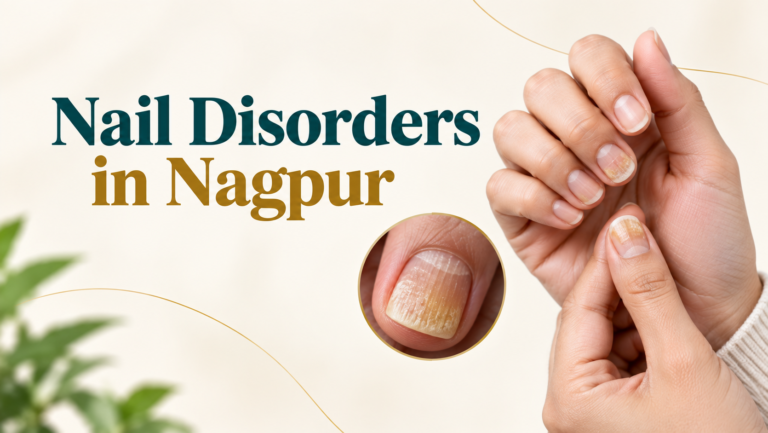
Nail Disorders in Nagpur: Common Causes, Symptoms & Treatment Options
Changes in your nails can sometimes be dismissed as a cosmetic issue. However, persistent changes in nail colour, thickness, shape, texture or growth can have several possible causes.
Nail problems may result from trauma, infections, skin conditions, nutritional or systemic factors, inflammatory disorders or repeated exposure to chemicals. Some changes are temporary, while others require proper dermatological evaluation.
If you are looking for nail disorder treatment in Nagpur, identifying the underlying cause is an important first step. Treating the visible nail change without understanding why it developed may not resolve the problem.
Trichoderm Centre provides dermatologist-led evaluation for skin, hair and nail concerns with an emphasis on personalised and evidence-based care.
What Are Nail Disorders?
Nail disorders are conditions that affect the appearance, structure, growth or function of the fingernails or toenails.
They can affect:
- Nail colour
- Nail thickness
- Nail shape
- Nail texture
- Nail growth
- Nail attachment to the skin
- Surrounding skin
- Nail strength
A single nail may be affected, or several nails may develop changes at the same time.
Because different conditions can produce similar-looking nail changes, diagnosis should be based on the overall clinical picture rather than appearance alone.
What Are the Common Signs of a Nail Disorder?
Some nail changes that may require evaluation include:
- Yellow or brown discoloration
- White or dark patches
- Thickened nails
- Brittle or crumbly nails
- Nails that split repeatedly
- Grooves or ridges
- Changes in nail shape
- Nails lifting from the nail bed
- Pain around the nail
- Swelling around the nail
- Recurrent inflammation
- Slow or abnormal nail growth
- Changes affecting multiple nails
Not every nail change means there is a serious underlying problem. However, persistent or progressive changes are worth discussing with a dermatologist.
Common Nail Problems and Their Possible Causes
Nail changes can have many causes. Some of the more common possibilities include infections, trauma, inflammatory skin conditions and repeated mechanical or chemical exposure.
1. Fungal Nail Infection
Fungal infections can affect the nails and may cause:
- Thickening
- Yellowish or whitish discoloration
- Brittleness
- Crumbling
- Changes in nail shape
- Separation of the nail from the nail bed
Fungal nail infection is only one possible explanation for an abnormal nail.
This is important because other nail conditions can look similar.
Treatment should therefore be based on the suspected cause and, when necessary, appropriate testing.
2. Nail Changes Associated With Psoriasis
Psoriasis can affect the nails as well as the skin.
Possible nail changes include:
- Small pits in the nail
- Discoloration
- Thickening
- Separation from the nail bed
- Irregular nail surface
Nail psoriasis can sometimes occur even when skin symptoms are limited or not very obvious.
If you have persistent nail changes along with scaly skin patches or a history of psoriasis, a dermatologist can assess whether the nails may be involved.
3. Nail Changes After Trauma
Injury to the nail can affect its appearance and growth.
Trauma may occur because of:
- Accidental injury
- Repeated pressure
- Tight footwear
- Nail biting
- Aggressive manicure or pedicure
- Repeated picking or cutting
Depending on the severity of the injury, the nail may develop discoloration, ridges or temporary changes in growth.
Toenails can be particularly vulnerable to repeated pressure from poorly fitting footwear.
4. Brittle or Splitting Nails
Nails that repeatedly split, peel or break may have several possible causes.
These can include:
- Frequent exposure to water
- Repeated use of detergents
- Chemical exposure
- Mechanical trauma
- Certain skin conditions
- Age-related changes
- Other underlying factors
Occasional nail breakage is common, but persistent brittleness affecting several nails may warrant evaluation.
5. Nail Discoloration
Nails can change colour for many reasons.
Depending on the pattern, discoloration may be associated with:
- Trauma
- Fungal infection
- Pigment changes
- Certain medications
- Skin conditions
- Nail-bed changes
A dark streak or patch in a nail should not automatically be assumed to be an injury or fungal infection.
A dermatologist can assess its appearance, location and progression and determine whether further evaluation is required.
Why Do Nails Become Thick?
Thickened nails can develop for different reasons.
Possible causes include:
- Fungal infection
- Repeated trauma
- Psoriasis
- Other inflammatory nail conditions
- Long-term changes in nail growth
Thickening of a toenail is particularly common after repeated pressure or injury.
Because several conditions can cause similar changes, treatment should depend on the underlying diagnosis.
Why Do Nails Develop Ridges?
Vertical ridges can become more noticeable with age and may not always indicate disease.
However, pronounced or newly developing ridges, especially when accompanied by other changes, may require evaluation.
Horizontal grooves or indentations can have different causes and should be assessed in the context of the person’s health and recent history.
The pattern, number of affected nails and direction of the ridges can all provide useful information during a dermatological examination.
Why Is One Nail Different From the Others?
When only one nail changes, the cause may be different from conditions affecting many nails.
Possible reasons include:
- Local trauma
- Repeated pressure
- Nail-bed changes
- Local infection
- Pigment-related changes
A persistent change in one nail should be monitored, particularly if it is progressively changing.
Can Skin Conditions Affect the Nails?
Yes.
Some dermatological conditions can involve both the skin and nails.
Examples include:
- Psoriasis
- Eczema and dermatitis
- Certain inflammatory conditions
- Some infections
This is one reason a dermatologist may examine the surrounding skin as well as the nail itself.
Trichoderm Centre’s Medical Dermatology services include evaluation of nail disorders along with a range of skin and hair conditions.
How Are Nail Disorders Diagnosed?
Diagnosis begins with a detailed examination of the nails.
A dermatologist may consider:
- Number of nails affected
- Fingernails versus toenails
- Duration of the changes
- Nail colour
- Nail thickness
- Surface pattern
- Changes around the nail
- History of trauma
- Skin symptoms
- Previous treatments
- Medical history
In some cases, additional testing may be useful.
For example, when a fungal infection is suspected, examination or laboratory testing of nail material may help establish whether fungi are actually present.
This distinction matters because treatment for a fungal infection is different from treatment for inflammatory or traumatic nail conditions.
Does Every Nail Problem Need Treatment?
Not necessarily.
Some nail changes may be harmless or temporary.
For example, a nail may look different for some time after an injury while normal nail growth gradually returns.
However, treatment or medical evaluation may be appropriate when:
- The change persists
- Several nails are affected
- The nail is painful
- The nail is separating from the nail bed
- The nail is becoming progressively thicker
- Discoloration is spreading or changing
- There is swelling or inflammation
- The problem repeatedly returns
The goal is not simply to improve the appearance of the nail but to identify and address the underlying cause.
Nail Disorder Treatment in Nagpur
Treatment depends entirely on the diagnosis.
There is no single treatment that is appropriate for every nail disorder.
Depending on the condition, management may involve:
Treatment for Fungal Nail Infection
If a fungal infection is confirmed or strongly suspected, the dermatologist may recommend an appropriate antifungal treatment.
The choice can depend on:
- Number of nails affected
- Severity
- Extent of nail involvement
- Whether the surrounding skin is also affected
- Previous treatment
Nail infections can take time to improve because healthy nail growth is gradual.
Treatment for Nail Psoriasis
When nail changes are related to psoriasis, treatment focuses on controlling the underlying inflammatory condition.
The treatment approach may differ depending on whether only the nails are affected or whether there are also skin or joint symptoms.
Treatment for Trauma-Related Nail Changes
When the nail has been damaged by trauma or repeated pressure, identifying and reducing the source of the injury may be an important part of management.
The nail may then gradually grow out as the nail plate is replaced.
Treatment for Inflammatory Nail Conditions
Inflammatory nail disorders may require prescription dermatological treatment.
The exact approach depends on the diagnosis and severity.
How Long Does Nail Treatment Take?
Nails grow slowly, so improvement may take time even after the underlying condition has been treated.
Fingernails generally grow faster than toenails.
As a result, visible improvement may take several weeks or months depending on:
- The nail involved
- The cause
- Severity
- Treatment
- Individual nail growth rate
A damaged or discoloured portion of the nail may need to grow out before the nail looks completely normal again.
This is why realistic expectations are important when treating nail disorders.
Can Nail Disorders Be Prevented?
Not every nail disorder can be prevented, but several habits can help maintain healthy nails.
Avoid Repeated Trauma
Try to avoid:
- Biting nails
- Picking at the nail
- Cutting cuticles aggressively
- Excessive filing
- Repeated pressure
Keep Nails Clean and Dry
Keeping the hands and feet clean and dry can help reduce the risk of certain infections.
Choose Comfortable Footwear
Shoes that are too tight can repeatedly press against toenails.
Comfortable footwear can help reduce unnecessary trauma.
Be Careful With Manicures and Pedicures
Aggressive cutting or manipulation around the nail can damage the nail or surrounding skin.
Choose hygienic practices and avoid procedures that repeatedly injure the nail folds.
Avoid Self-Treating Persistent Nail Changes
Repeatedly applying antifungal products or other treatments without knowing the cause may delay appropriate diagnosis.
If a nail problem persists, professional evaluation is often more useful than repeatedly changing products.
When Should You See a Dermatologist for a Nail Problem?
Consider consulting a dermatologist if you notice:
- A nail becoming increasingly thick
- Persistent discoloration
- Repeated nail splitting
- A nail separating from the nail bed
- Pain or swelling
- Changes affecting several nails
- A persistent dark streak or patch
- Nail changes accompanied by skin symptoms
- Nail changes that do not improve after basic care
- Recurrent nail infections
A dermatologist can determine whether the problem is related to infection, trauma, inflammation or another cause.
For a broader overview of conditions that dermatologists evaluate, you can also read When Should You Consult a Dermatologist in Nagpur?.
Nail Disorders and Dermatology Care in Ramdaspeth
If you are searching for a nail dermatologist in Ramdaspeth, nail disorders are among the concerns evaluated through dermatological care at Trichoderm Centre.
The clinic’s Dermatologist in Ramdaspeth guide specifically lists nail disorders among the skin, hair and nail concerns managed at the clinic.
Nail problems should be evaluated according to their cause rather than treated only as a cosmetic concern.
Nail Disorder Treatment at Trichoderm Centre
Trichoderm Centre provides personalised dermatological care for skin, hair and nail concerns.
The approach focuses on:
- Identifying the likely cause
- Assessing the affected nail or nails
- Considering associated skin conditions
- Recommending appropriate treatment
- Avoiding unnecessary medication or procedures
- Setting realistic expectations about nail recovery
Get Directions to Trichoderm Centre
If you are planning to visit the clinic in Ramdaspeth, Nagpur:
Frequently Asked Questions About Nail Disorders
What are the most common nail disorders?
Common nail problems include fungal nail infections, trauma-related changes, brittle or splitting nails, inflammatory nail conditions and changes associated with psoriasis.
Why are my nails becoming thick?
Thick nails can have several causes, including fungal infection, repeated trauma and inflammatory skin conditions. A dermatologist can help determine the cause.
Why are my nails changing colour?
Nail discoloration can occur because of infection, trauma, pigment changes, medications or other nail conditions. Persistent or unexplained discoloration should be evaluated.
Can psoriasis affect the nails?
Yes. Psoriasis can cause nail pits, discoloration, thickening and separation of the nail from the nail bed.
Are brittle nails always caused by a vitamin deficiency?
No. Brittle nails can have several causes, including repeated water or chemical exposure, trauma, skin conditions and other factors. A medical evaluation may be useful when the problem is persistent.
Can fungal infections affect fingernails and toenails?
Yes. Fungal infections can affect both fingernails and toenails, although toenails are commonly involved.
How long does nail treatment take?
It depends on the cause and the affected nail. Because nails grow slowly, visible improvement can take weeks or months.
Should I see a dermatologist for nail problems?
You should consider an evaluation if the nail change is persistent, progressive, painful, recurrent or associated with changes in the surrounding skin.
Can nail problems be treated without removing the nail?
Many nail disorders can be managed without removing the nail. Treatment depends on the underlying diagnosis and severity.
Where can I get nail disorder treatment in Nagpur?
You can consult at Trichoderm Centre in Nagpur for evaluation of persistent nail changes and other dermatological concerns.
Conclusion
Nail changes can have many different causes, ranging from minor trauma and repeated exposure to more specific conditions such as fungal infections or inflammatory skin diseases.
A thickened, discoloured, brittle or otherwise changing nail should not automatically be assumed to have a single cause.
The right approach begins with identifying what is causing the change. Depending on the diagnosis, treatment may involve medication, management of an underlying skin condition, reducing repeated trauma or simply allowing the nail to grow out naturally.
If you have a persistent nail problem and are looking for nail disorder treatment in Nagpur or Ramdaspeth, a dermatologist can help determine the cause and discuss appropriate treatment options.