Book Appointment Now
Fungal Skin Infection Treatment in Nagpur: Symptoms, Causes, Types & Treatment Options
Fungal skin infections are common dermatological conditions that can cause itching, scaling, redness, irritation and changes in skin colour. They may affect different areas of the body, including the skin, scalp, feet, groin, beard and nails.
Some fungal infections are relatively easy to treat, while others may require prescription medication or a longer treatment course. A rash that looks like a fungal infection can also be caused by eczema, psoriasis, allergies or other skin conditions, so getting the diagnosis right is important.
If you are looking for fungal skin infection treatment in Nagpur, a dermatologist can examine the affected area, identify the likely cause and recommend treatment according to the location and severity of the infection.
Trichoderm Centre provides personalised, evidence-based care for fungal infections and other medical dermatological conditions.
What Is a Fungal Skin Infection?
A fungal skin infection occurs when certain types of fungi grow on the skin, hair or nails.
One common group of fungal infections is called tinea, which includes conditions such as ringworm, athlete’s foot and jock itch. Despite its name, ringworm is not caused by a worm. It is a fungal infection.
Fungal infections can occur on different parts of the body and may have different appearances depending on the area involved.
What Are the Symptoms of a Fungal Skin Infection?
Symptoms vary according to the type and location of the infection.
Common symptoms can include:
- Itching
- Scaling or peeling
- Red, brown or grey patches
- Circular or ring-shaped rashes
- Dry or cracked skin
- Burning or irritation
- Changes in skin colour
- Small bumps or blisters
- Thickened or discoloured nails
- Hair loss in some scalp infections
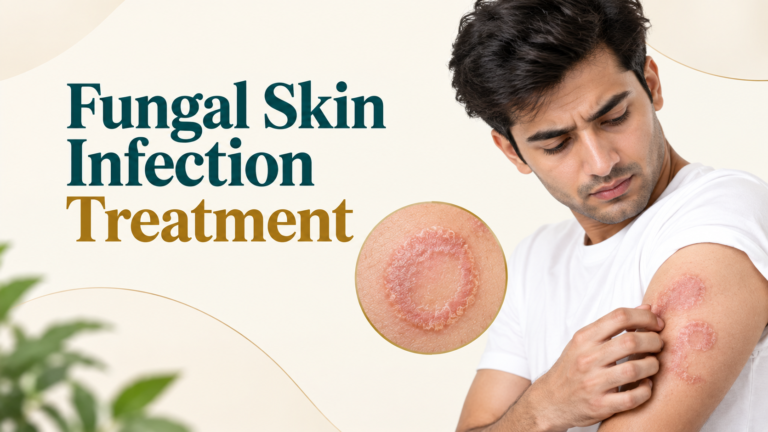
Ringworm on the skin often produces an itchy, scaly, ring-shaped rash, although fungal infections do not always have a classic ring appearance.
On darker skin tones, fungal rashes may appear brown, grey, purple or darker rather than bright red, so appearance can vary considerably.
Where Can Fungal Infections Occur?
Fungal infections can affect many areas of the body.
1. Body
A fungal infection affecting the body is commonly referred to as ringworm or tinea corporis.
It may appear as:
- Round or irregular patches
- A scaly border
- Itching
- Gradual expansion of the affected area
- One or several patches
The centre of a ring-shaped rash may sometimes appear clearer than the outer border.
2. Feet
Fungal infection of the feet is commonly called athlete’s foot or tinea pedis.
It can cause:
- Itching between the toes
- Peeling skin
- Dryness
- Burning
- Cracking
- Scaling
- Irritation
Some infections can extend from the feet to other areas, including the hands.
3. Groin
Fungal infection around the groin is often called jock itch or tinea cruris.
It may cause:
- Itching
- Scaling
- Red or darker patches
- Irritation
- A spreading rash around the inner thighs or groin folds
Because several different conditions can affect the groin, an accurate diagnosis is important before treatment.
4. Scalp
Fungal infection of the scalp is called tinea capitis.
It can cause:
- Scalp scaling
- Itching
- Circular bald patches
- Broken hairs
- Hair loss
- Crusting or inflammation in more severe cases
Scalp fungal infections require medical evaluation because creams alone may not be sufficient. Prescription antifungal treatment is generally needed for scalp ringworm.
5. Beard Area
Fungal infection can occasionally affect the beard area.
Possible symptoms include:
- Itchy patches
- Scaling
- Redness or darker discolouration
- Swelling
- Pus-filled bumps
- Hair loss in the affected area
Because other conditions can look similar, persistent inflammation or hair loss in the beard area should be evaluated by a dermatologist.
6. Nails
Fungal nail infections can cause:
- Nail discolouration
- Thickening
- Brittleness
- Crumbling
- Changes in nail shape
- Separation of the nail from the nail bed
Nail infections can take longer to clear because nails grow slowly.
What Causes Fungal Skin Infections?
Fungi can grow more easily in warm, moist environments.
Factors that may increase the risk include:
- Excessive sweating
- Humid conditions
- Wearing damp clothing for long periods
- Tight clothing
- Shared towels or clothing
- Walking barefoot in communal wet areas
- Close skin-to-skin contact
- Contact with infected people or animals
- Certain sports or activities involving close physical contact
Keeping the skin clean and dry and avoiding the sharing of personal items can help reduce the risk of infection.
Why Are Fungal Infections More Common in Warm and Humid Conditions?
Fungi can thrive in warm and moist environments.
Sweating can create moisture around areas such as:
- Groin folds
- Underarms
- Between the toes
- Skin folds
- Areas covered by tight clothing
This does not mean that every rash occurring during hot weather is fungal.
Eczema, allergies, irritation and other dermatological conditions can produce similar symptoms.
This is why a persistent or recurring rash should not automatically be assumed to be a fungal infection.
Is Every Itchy Rash a Fungal Infection?
No.
An itchy or scaly rash can have many possible causes, including:
- Fungal infection
- Eczema
- Psoriasis
- Contact dermatitis
- Allergic reactions
- Irritation
- Other inflammatory skin conditions
For example, the live Trichoderm Centre Eczema Treatment guide explains that eczema and fungal infections can sometimes produce similar-looking symptoms.
Similarly, the Psoriasis Treatment in Nagpur guide notes that psoriasis can sometimes resemble eczema, fungal infections and other skin conditions.
The correct treatment therefore depends on the actual diagnosis.
How Is a Fungal Skin Infection Diagnosed?
A dermatologist may be able to identify a fungal infection by examining the affected skin.
Depending on the location and appearance, additional testing may sometimes be useful.
This can include examining a sample of:
- Skin
- Hair
- Nail material
Laboratory examination can help confirm whether fungi are present when the diagnosis is uncertain.
Diagnosis becomes particularly important when:
- The rash keeps returning
- Previous treatment has failed
- The rash is spreading
- The appearance is unusual
- The scalp or nails are involved
- Another skin condition is also possible
Fungal Skin Infection Treatment in Nagpur
Treatment depends on:
- The type of fungal infection
- Location
- Extent of involvement
- Duration of the infection
- Previous treatment
- Whether the scalp, beard or nails are involved
- Individual medical factors
A dermatologist may recommend an antifungal medicine in the form of a cream, ointment, lotion, powder or oral medication depending on the condition.
Topical Antifungal Treatment
For some fungal infections affecting the skin, topical antifungal medicines may be sufficient.
They are applied directly to the affected area according to the recommended treatment schedule.
It is important to use the medicine for the duration advised rather than stopping as soon as the itching improves.
Oral Antifungal Treatment
Some infections require antifungal medicines taken by mouth.
This may be considered when:
- The infection is extensive
- The scalp is affected
- The beard area is affected
- The nails are involved
- Topical treatment has not worked
- The infection is difficult to control
The choice of medicine and duration should be determined by a dermatologist.
Treatment for Fungal Nail Infection
Fungal nail infections can require longer treatment because the affected nail needs to grow out.
A dermatologist may recommend topical or oral treatment depending on the type and severity of the infection.
Why You Should Avoid Random Combination Creams
One of the common problems with persistent fungal infections is using a cream without knowing exactly what is causing the rash.
Some combination creams contain corticosteroids.
Although steroids can reduce inflammation temporarily, they can make a fungal infection worse or change its appearance, making diagnosis more difficult. The CDC specifically advises against using steroid creams for a rash that may be ringworm unless directed by a healthcare professional.
If a rash repeatedly improves and then returns, or continues spreading despite treatment, it is better to have it examined rather than repeatedly changing creams.
How Long Does Fungal Infection Treatment Take?
The treatment duration varies depending on:
- The affected body area
- Type of fungal infection
- Severity
- Extent of infection
- Treatment selected
- Individual response
Some superficial skin infections may improve within a few weeks with appropriate treatment.
Scalp and nail infections may require a longer treatment period.
Even when symptoms start improving, treatment should generally be continued for the duration recommended by the doctor or medication instructions. Stopping treatment too early can contribute to recurrence.
Can Fungal Skin Infections Come Back?
Yes.
A fungal infection can recur if:
- Treatment is stopped too early
- The original infection was not completely cleared
- Another infected body area remains untreated
- Personal items remain contaminated
- The underlying risk factors continue
- There is repeated exposure to the fungus
For recurrent infections, a dermatologist may reassess the diagnosis and look for contributing factors.
How Can You Prevent Fungal Skin Infections?
Simple hygiene and moisture-control measures can help reduce the risk.
Keep Skin Dry
Dry areas where sweat accumulates, particularly:
- Between the toes
- Groin folds
- Underarms
- Other skin folds
Change Damp Clothes
Change sweaty clothing after exercise or prolonged sweating.
Avoid Sharing Personal Items
Do not share:
- Towels
- Socks
- Clothing
- Razors
- Personal grooming items
Fungal infections can spread through contaminated personal items.
Use Footwear in Communal Wet Areas
Wear appropriate footwear in places such as public showers, locker rooms and swimming-pool areas.
Wash Hands
Wash your hands after touching an infected area and avoid scratching the rash unnecessarily.
These measures can reduce the chance of spreading infection to other parts of the body.
When Should You See a Dermatologist?
Consider consulting a dermatologist if:
- The rash keeps returning
- The rash is spreading
- Itching is persistent
- The skin is cracking or painful
- The infection affects the scalp
- There is hair loss in the affected area
- The nails are becoming thick or discoloured
- Previous treatment has not worked
- You are unsure whether the rash is fungal
- You have been repeatedly using combination creams
The Medical Dermatology services at Trichoderm Centre include evaluation and management of fungal skin infections along with other skin, hair and nail conditions.
Fungal Skin Infection Treatment in Ramdaspeth, Nagpur
If you are searching for fungal skin infection treatment in Ramdaspeth, Trichoderm Centre provides dermatologist-led care in Ramdaspeth, Nagpur.
Fungal infections are among the skin conditions evaluated through medical dermatology at the clinic. The aim is to identify the underlying condition before recommending an appropriate treatment plan.
The Dermatologist in Ramdaspeth guide also includes fungal and other skin infections among the conditions evaluated at Trichoderm Centre.
Fungal Infection Treatment at Trichoderm Centre
We provide personalised dermatological care for skin, hair and nail concerns at Trichoderm Centre.
The clinic’s approach focuses on:
- Accurate assessment
- Evidence-based treatment
- Clear guidance
- Individual treatment planning
- Avoiding unnecessary treatment
- Long-term skin health
Frequently Asked Questions About Fungal Skin Infections
What are the common symptoms of a fungal skin infection?
Common symptoms include itching, scaling, peeling, circular or ring-shaped patches, irritation and changes in skin colour. Symptoms vary depending on the affected body area.
Is every ring-shaped rash a fungal infection?
No. A ring-shaped rash can be suggestive of ringworm, but other skin conditions can sometimes look similar. A dermatologist can assess the rash and determine the likely cause.
Can fungal infections affect the scalp?
Yes. Scalp ringworm can cause scaling, itching and patches of hair loss and generally requires prescription antifungal treatment.
Can fungal infections affect the nails?
Yes. Fungal nail infections can cause thickening, discolouration, brittleness and changes in the nail shape.
Can fungal infections come back?
Yes. Recurrence can occur when an infection is not completely cleared or when there is repeated exposure or another untreated infected area.
Should I use a steroid cream for a fungal infection?
Steroid creams should not be used for a rash suspected to be ringworm unless specifically advised by a healthcare professional. Steroids can worsen fungal infections and alter their appearance.
How long does fungal infection treatment take?
It depends on the location, type and severity of the infection. Some skin infections may improve over a few weeks, while scalp and nail infections can require longer treatment.
Can fungal infections spread from one person to another?
Yes. Some fungal infections, including ringworm, can spread through direct contact or contaminated personal items.
When should I see a dermatologist for a fungal infection?
Consult a dermatologist if the infection is spreading, recurring, affecting the scalp or nails, causing significant symptoms, or not improving with appropriate treatment.
Where can I get fungal skin infection treatment in Nagpur?
You can consult Dr. Shubham Singh at Trichoderm Centre in Ramdaspeth, Nagpur, for evaluation of fungal and other skin infections.
Get Directions to Trichoderm Centre on Google Maps
Conclusion
Fungal skin infections can affect the body, feet, groin, scalp, beard and nails and may cause itching, scaling, irritation or changes in skin appearance.
Because fungal infections can resemble eczema, psoriasis, allergies and other skin conditions, correct diagnosis is an important part of treatment.
Treatment depends on the affected area, severity and type of infection. Some skin infections may respond to topical antifungal medicines, while scalp, nail, beard or more extensive infections may require prescription treatment.
If you have a persistent, recurring or spreading rash, consult a dermatologist rather than repeatedly trying different creams.