Book Appointment Now
Eczema Treatment in Nagpur: Symptoms, Triggers & Treatment Options
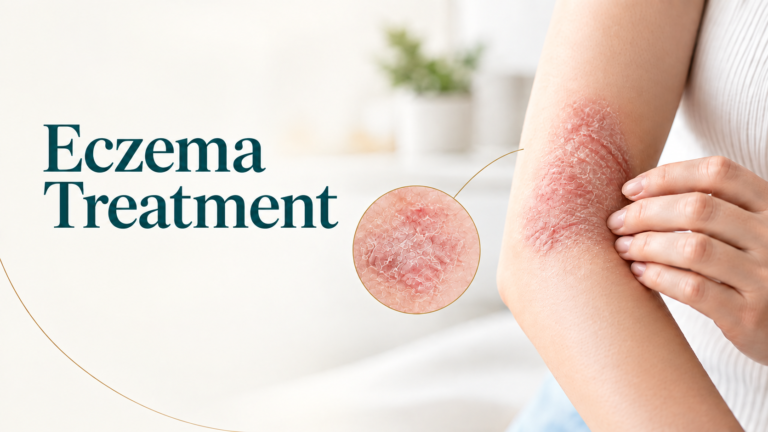
Eczema is a common skin condition that can cause itching, dryness, irritation, scaling and changes in the appearance of the skin. Symptoms may improve for a period and then return during flare-ups.
Although eczema is commonly associated with childhood, it can also affect teenagers and adults. Different types of eczema can look similar to other skin conditions, so persistent or recurring rashes should be properly evaluated rather than repeatedly treated with random creams or home remedies.
If you are looking for eczema treatment in Nagpur, a dermatologist can evaluate your symptoms, identify possible triggers and recommend treatment based on the type and severity of the condition.
What Is Eczema?
Eczema refers to a group of skin conditions that can cause itchy, dry and inflamed skin. Atopic dermatitis is one of the most common forms.
Depending on the type of eczema and the individual’s skin tone, it may appear as:
- Dry or rough skin
- Itching
- Red, brown, grey, purple or darker patches
- Scaling or flaking
- Cracked skin
- Thickened skin from repeated scratching
- Small bumps or blisters
- Oozing or crusting in some cases
Eczema can affect different areas of the body, including the face, neck, hands, arms, legs and skin folds.
Because several other skin conditions can produce similar symptoms, diagnosis is an important first step.
If you are unsure whether a recurring rash is eczema, allergy, infection or another skin condition, you can read our guide on common skin problems that should not be ignored.
What Causes Eczema?
Eczema does not always have one single cause.
Atopic dermatitis is associated with changes in the skin barrier, immune-system activity and genetic factors. Other forms of eczema can develop when the skin reacts to particular irritants or allergens.
Common factors that may trigger or worsen eczema include:
- Harsh soaps and cleansers
- Fragranced skincare products
- Detergents
- Certain fabrics
- Heat and sweating
- Dry weather
- Changes in temperature
- Skin irritation
- Allergens
- Stress
- Scratching
Not every trigger affects every person.
Identifying your own triggers can therefore be an important part of managing recurring eczema.
What Are the Symptoms of Eczema?
Eczema symptoms can vary depending on the type of eczema, age, skin tone and severity.
1. Itching
Persistent itching is one of the most common symptoms of eczema.
Repeated scratching can damage the skin and may contribute to thickening, irritation and sometimes secondary infection.
2. Dry or Rough Skin
Eczema-affected skin may feel dry, tight, rough or sensitive.
Severe dryness can sometimes result in cracks or painful areas.
3. Rash or Skin Discolouration
Eczema can cause visible changes in the skin.
The colour and appearance of the rash can vary significantly between individuals and skin tones.
4. Thickened Skin
Repeated scratching or rubbing can cause the affected skin to become thicker and more leathery over time.
5. Recurrent Flare-Ups
Eczema can follow a pattern of flare-ups and periods of improvement.
Certain environmental or lifestyle factors may trigger symptoms again.
6. Oozing, Crusting or Blisters
Some forms of eczema can cause small blisters, oozing or crusting.
If these symptoms are accompanied by increasing pain, warmth, swelling or rapidly worsening inflammation, a dermatologist should assess the condition.
Is Eczema Contagious?
No. Atopic eczema itself is not contagious and cannot be passed from one person to another through ordinary contact.
However, not every itchy or scaly rash is eczema.
Fungal infections, allergic reactions, contact dermatitis and several other dermatological conditions can produce similar-looking symptoms.
This is why persistent rashes are better evaluated by a dermatologist rather than assuming that every itchy rash is eczema.
If you are looking for a dermatologist in Nagpur for a recurring rash or other skin concern, you can also read our guide on when you should consult a dermatologist in Nagpur.
What Can Trigger an Eczema Flare-Up?
Eczema triggers vary from person to person.
Some commonly reported triggers include:
- Fragranced products
- Harsh soaps
- Detergents
- Excessive heat
- Sweating
- Dry weather
- Irritating fabrics
- Environmental allergens
- Stress
- Scratching
Keeping track of when flare-ups occur may help identify personal triggers.
For example, if itching repeatedly increases after using a particular soap, cosmetic product or detergent, that information can be useful during a dermatology consultation.
How Is Eczema Diagnosed?
A dermatologist usually evaluates eczema through a combination of skin examination and medical history.
During a consultation, the doctor may ask:
- When did the rash first appear?
- Is the itching constant or occasional?
- Which areas of the body are affected?
- Does the rash keep returning?
- Have you noticed specific triggers?
- What skincare products are you using?
- Have you already tried any creams or medicines?
- Does anyone in your family have eczema or allergies?
- Does the rash worsen with heat, sweating or weather changes?
In some cases, additional evaluation may be necessary to distinguish eczema from another skin condition.
The goal is to identify the underlying condition before selecting treatment.
Eczema Treatment in Nagpur
There is no single eczema treatment that is suitable for every patient.
Treatment depends on the type of eczema, location, severity, symptoms, age and individual medical history.
A dermatologist may recommend a combination of approaches.
Moisturising and Skin Barrier Care
Regular moisturising is an important part of eczema management.
Fragrance-free creams or ointments may be recommended to help reduce dryness and support the skin barrier.
Moisturising regularly can be particularly important after bathing.
Trigger Management
If particular irritants or triggers are identified, reducing exposure to them may help decrease flare-ups.
This may involve changing skincare products, avoiding harsh cleansers, modifying bathing habits or making other practical changes.
Prescription Topical Treatment
Depending on the diagnosis and severity, a dermatologist may prescribe topical medicines to control inflammation and symptoms.
The appropriate medicine, strength, application frequency and treatment duration should be decided by a qualified dermatologist.
Treatment of Secondary Infection
Scratching and damaged skin can increase the risk of infection.
If eczema becomes increasingly painful, warm, swollen or develops pus, crusting or rapidly worsening symptoms, medical evaluation is important.
Treatment for More Severe Eczema
Some patients with moderate or severe eczema may need treatment beyond basic skincare and topical medicines.
Depending on the diagnosis, a dermatologist may consider options such as phototherapy or systemic medicines.
The appropriate treatment depends on the individual patient and should be determined after a medical evaluation.
For comprehensive evaluation of eczema and other medical skin conditions, see Medical Dermatology at Trichoderm Centre.
Eczema Skin Care: What Can You Do at Home?
Along with your dermatologist’s treatment plan, gentle skincare may help reduce irritation.
Some general measures include:
- Use a gentle, fragrance-free cleanser.
- Moisturise regularly.
- Apply moisturiser after bathing while the skin is still slightly damp.
- Avoid very hot showers.
- Avoid aggressive scrubbing.
- Choose comfortable, non-irritating clothing.
- Keep your nails short to reduce skin damage from scratching.
- Identify and avoid personal triggers where possible.
However, home skincare should not replace medical evaluation when a rash is persistent, recurrent or severe.
When Should You See a Dermatologist for Eczema?
Consider consulting a dermatologist if:
- Your rash keeps returning.
- Itching is affecting your sleep.
- Your skin is becoming thickened or cracked.
- Basic skincare is not helping.
- The rash is spreading.
- You are unsure whether the condition is eczema.
- The skin becomes painful, swollen or warm.
- There is oozing, crusting or pus.
- You are experiencing frequent flare-ups.
- The condition is affecting your daily activities.
Persistent or recurring skin problems may have different causes and require different treatments.
Eczema Treatment in Ramdaspeth, Nagpur
For patients searching for eczema treatment in Ramdaspeth, Trichoderm Centre provides dermatologist-led care from its Ramdaspeth clinic in Nagpur.
The clinic is located at:
Chamber Number 24, Pushpkunj Complex, above Sardar Ji Restaurant, Ramdaspeth, Nagpur, Maharashtra 440010.
Eczema Treatment at Trichoderm Centre
Trichoderm Centre evaluates skin conditions based on the patient’s symptoms, medical history and clinical examination.
The clinic’s approach focuses on:
- Clear and honest guidance
- Personalised treatment
- Evidence-based dermatology
- Minimal and appropriate treatment
- Long-term skin health
- Individual treatment planning
Frequently Asked Questions About Eczema
Is eczema permanently curable?
Some forms of eczema are chronic and may require long-term management. Symptoms can often be controlled with appropriate treatment and skincare, but flare-ups may recur.
Can eczema go away on its own?
Eczema symptoms can sometimes improve or disappear for periods of time. However, recurring symptoms should not be ignored, particularly when itching or inflammation continues.
Is eczema caused by poor hygiene?
No. Eczema is not simply caused by poor hygiene.
In fact, excessive washing or harsh cleansing can irritate sensitive skin and worsen dryness.
Can stress make eczema worse?
Stress can contribute to flare-ups in some people, although triggers vary between individuals.
Can eczema leave dark marks?
Eczema-related inflammation and repeated scratching can sometimes leave temporary or longer-lasting changes in skin colour.
The appearance and duration of these changes can vary depending on the individual’s skin and the severity of inflammation.
Can eczema be mistaken for a fungal infection?
Yes.
Several skin conditions can cause itching, scaling, redness or discolouration.
A dermatologist can examine the affected skin and determine whether the condition is eczema, fungal infection, allergy or another dermatological problem.
Should I use steroid cream for eczema?
Topical corticosteroids are among the treatments dermatologists may prescribe for eczema.
However, the appropriate medicine, strength, application frequency and duration depend on the individual diagnosis.
They should be used according to medical advice rather than self-prescribed for every recurring rash.
Where can I get eczema treatment in Nagpur?
You can consult at Trichoderm Centre for evaluation of eczema and other persistent skin concerns.
Conclusion
Eczema can cause recurring itching, dryness, irritation and changes in the skin, but not every recurring rash is eczema.
The first step is understanding what is causing the symptoms. A dermatologist can assess the skin, identify possible triggers and recommend a treatment plan based on the type and severity of the condition.