Book Appointment Now
Psoriasis Treatment in Nagpur: Symptoms, Types, Causes & Treatment Options
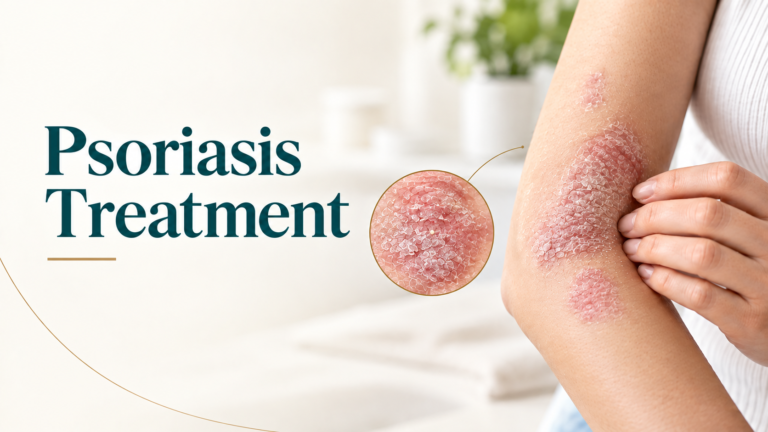
Psoriasis is a chronic inflammatory skin condition that can cause thickened, raised or scaly patches on the skin. It can affect different parts of the body, including the scalp, elbows, knees, lower back, hands, feet and nails.
Psoriasis can sometimes look similar to eczema, fungal infections or other skin conditions. Getting the diagnosis right is therefore important before starting treatment.
If you are looking for psoriasis treatment in Nagpur, a dermatologist can examine your skin, scalp and nails, assess the severity of the condition and recommend an appropriate treatment and long-term management plan.
What Is Psoriasis?
Psoriasis is a chronic inflammatory skin disease in which skin cells develop and accumulate more quickly than normal. This can result in raised patches or plaques covered with scales.
The appearance of psoriasis can vary considerably depending on the type of psoriasis, the area affected and the individual’s skin tone.
Common signs may include:
- Thickened or raised patches
- Scaling or flaking
- Itching
- Dryness
- Cracking
- Burning or discomfort
- Changes in nail appearance
- Recurrent flare-ups
Psoriasis is not contagious, so it cannot be passed from one person to another through ordinary physical contact.
What Does Psoriasis Look Like?
The appearance of psoriasis can vary from person to person.
On some skin tones, psoriasis may appear as red or pink raised plaques with silvery-white scales. On darker skin tones, it may appear more brown, purple or darker than the surrounding skin, and the scaling may be more prominent.
Commonly affected areas include:
- Scalp
- Elbows
- Knees
- Lower back
- Hands
- Feet
- Nails
- Skin folds
However, psoriasis can develop almost anywhere on the body.
If you have a persistent rash but are unsure whether it is psoriasis, eczema or another condition, a dermatologist can help determine the cause.
You can also read our guide on common skin problems that should not be ignored to understand when recurring skin symptoms may require professional evaluation.
What Are the Different Types of Psoriasis?
Psoriasis is not one single condition. Different types can have different patterns and symptoms.
Plaque Psoriasis
Plaque psoriasis is the most common form.
It usually causes raised, thickened patches of skin that may have a dry or silvery scale.
Common areas include:
- Elbows
- Knees
- Scalp
- Lower back
However, plaque psoriasis can occur elsewhere as well.
Scalp Psoriasis
Scalp psoriasis can cause thickened, scaly patches on the scalp.
It may sometimes be confused with severe dandruff or another scalp condition.
If scaling is persistent, extensive or accompanied by other skin changes, a dermatological examination can help determine the cause.
Nail Psoriasis
Psoriasis can also affect the nails.
Possible changes include:
- Pitting
- Thickening
- Discolouration
- Separation of the nail from the nail bed
- Changes in nail texture
Nail changes should be assessed because they can sometimes occur alongside other forms of psoriasis.
Guttate Psoriasis
Guttate psoriasis can cause many small, scaly spots or bumps, often appearing relatively suddenly on the trunk, arms or legs.
It is more commonly seen in children and young adults and may sometimes develop after an infection.
Inverse Psoriasis
Inverse psoriasis usually affects skin folds, such as:
- Armpits
- Groin
- Under the breasts
- Other areas where skin touches skin
Because these areas are naturally moist and less exposed to air, the appearance can differ from typical plaque psoriasis.
Pustular Psoriasis
Pustular psoriasis can cause pus-filled bumps surrounded by inflamed skin.
Some forms can be severe and require prompt medical attention.
A sudden widespread eruption accompanied by significant illness, fever or severe pain should be evaluated urgently.
What Causes Psoriasis?
The exact cause of psoriasis is complex.
It involves the immune system and an accelerated cycle of skin-cell development. Genetic and environmental factors can also influence who develops psoriasis.
Having psoriasis is not simply a result of poor hygiene.
Certain factors may trigger or worsen flare-ups, although triggers vary from person to person.
Possible triggers include:
- Stress
- Skin injury
- Certain infections
- Weather changes
- Smoking
- Alcohol
- Some medications
- Other individual triggers
Identifying personal triggers can be an important part of long-term psoriasis management.
Is Psoriasis Contagious?
No.
Psoriasis is not an infection and cannot be transmitted from one person to another through:
- Touching
- Hugging
- Sharing a room
- Sharing ordinary household items
- Physical contact
If several members of a family have psoriasis, this is more likely related to genetic susceptibility rather than contagious spread.
Psoriasis vs Eczema: What Is the Difference?
Psoriasis and eczema can sometimes look similar, particularly when the skin is inflamed, itchy or scaly.
However, they are different conditions.
Psoriasis
Psoriasis often produces:
- Raised, well-defined patches
- Thicker plaques
- More visible scaling
- Scalp involvement
- Nail changes in some patients
- Recurrent inflammatory flare-ups
Eczema
Eczema may commonly involve:
- Significant itching
- Dryness
- Irritation
- Cracking
- Recurrent flare-ups
- Skin-barrier problems
The distinction is not always obvious from appearance alone.
If you are unsure whether you have psoriasis, eczema or another skin condition, a dermatologist should evaluate the affected skin rather than relying only on photographs or self-diagnosis.
You can also read our detailed guide on eczema treatment in Nagpur if recurring itching or dry, inflamed skin is your main concern.
How Is Psoriasis Diagnosed?
A dermatologist can usually diagnose psoriasis by examining the skin and asking about symptoms and medical history.
During a consultation, the doctor may assess:
- The location of the patches
- The appearance of scaling
- How long symptoms have been present
- Whether symptoms come and go
- Whether the scalp or nails are affected
- Whether family members have psoriasis
- Possible triggers
- Other medical conditions
- Joint symptoms
In some cases, a small skin sample may be required to help confirm the diagnosis or rule out another condition.
Can Psoriasis Affect the Nails?
Yes.
Psoriasis can affect fingernails and toenails.
Possible nail changes include:
- Small pits
- Thickening
- Discolouration
- Crumbling
- Separation from the nail bed
Nail involvement is important to mention during a dermatology consultation because it may influence the overall assessment and treatment plan.
If you have unexplained or persistent nail changes, you can also consult a dermatologist for evaluation of nail and skin concerns through Medical Dermatology.
Can Psoriasis Affect the Joints?
Yes.
Some people with psoriasis develop a condition called psoriatic arthritis, which can cause joint pain, stiffness or swelling.
Possible symptoms may include:
- Joint pain
- Swelling
- Morning stiffness
- Finger or toe swelling
- Persistent heel pain
- Changes in movement
If someone with psoriasis develops persistent joint symptoms, they should inform their dermatologist and seek appropriate medical evaluation.
Early recognition of joint symptoms is important because psoriatic arthritis can require coordinated medical management.
Psoriasis Treatment in Nagpur
There is no single psoriasis treatment that is appropriate for everyone.
Treatment depends on factors such as:
- Type of psoriasis
- Severity
- Areas affected
- Scalp or nail involvement
- Impact on daily life
- Other health conditions
- Previous treatments
- Response to treatment
Dermatologists may use one treatment or combine different approaches depending on the individual patient’s needs.
Topical Treatments
For some patients, medicines applied directly to the affected skin may be sufficient.
Depending on the diagnosis, a dermatologist may prescribe treatments that help:
- Reduce inflammation
- Control itching
- Reduce scaling
- Slow excessive skin-cell growth
- Improve the appearance of plaques
The choice of medication depends on the location and severity of psoriasis.
Moisturisers and Skin Care
Psoriasis can make the skin dry and scaly.
Regular use of suitable moisturisers may help reduce dryness and improve comfort.
Fragrance-free moisturising products may be preferable for sensitive skin.
Moisturising alone does not treat every case of psoriasis, but it can form an important part of supportive skin care.
Light-Based Treatment
Phototherapy may be considered for some patients with psoriasis.
It uses controlled light under medical supervision.
It should not be confused with deliberately exposing psoriasis to excessive sunlight or using tanning beds, which can damage the skin.
Systemic Treatment
Patients with more extensive or difficult-to-control psoriasis may require medicines that work throughout the body.
Depending on the individual diagnosis, dermatologists may consider different prescription medicines, including oral or injectable treatments.
The choice requires assessment of disease severity, other medical conditions, current medications and potential risks.
Combination Treatment
Some patients may benefit from a combination of treatments.
A dermatologist may adjust the treatment plan over time depending on how the psoriasis responds.
There is no single treatment that works for everyone, so treatment should be individualised.
Why Psoriasis Requires Long-Term Management
Psoriasis is generally a chronic condition.
Symptoms may improve significantly with treatment and then return during future flare-ups.
This does not necessarily mean that treatment has failed.
Long-term management may involve:
- Following the prescribed treatment plan
- Identifying personal triggers
- Maintaining appropriate skin care
- Attending follow-up appointments
- Reporting new symptoms
- Adjusting treatment when necessary
Regular follow-up can also help a dermatologist monitor the skin, nails and possible joint symptoms.
What Can Make Psoriasis Worse?
Triggers vary between individuals, but some factors may contribute to flare-ups.
These can include:
- Stress
- Skin injuries
- Certain infections
- Smoking
- Alcohol
- Weather changes
- Some medicines
- Stopping treatment without medical advice
Keeping track of your flare-ups can help identify patterns.
If your psoriasis repeatedly worsens after a particular event, product or change in routine, mention this during your dermatology consultation.
What Should You Avoid If You Have Psoriasis?
There is no universal list of things every person with psoriasis must avoid.
However, some general measures may help:
- Avoid excessive scratching.
- Avoid harsh scrubbing of plaques.
- Avoid using multiple prescription creams without medical guidance.
- Avoid stopping prescribed treatment suddenly without discussing it with your dermatologist.
- Avoid unverified treatments that promise a guaranteed cure.
- Protect your skin from unnecessary injury.
- Keep the skin moisturised.
Treatment should be based on the actual type and severity of psoriasis rather than online recommendations alone.
When Should You See a Dermatologist for Psoriasis?
Consider seeing a dermatologist if:
- You have persistent thick or scaly patches.
- Your skin rash keeps returning.
- Itching is affecting your sleep.
- The rash is spreading.
- Your scalp has persistent thick scaling.
- Your nails are developing unexplained changes.
- You have recurring flare-ups.
- Over-the-counter products are not helping.
- You are unsure whether the rash is psoriasis.
- You develop joint pain, stiffness or swelling.
If you are looking for a dermatologist in Nagpur, professional evaluation can help distinguish psoriasis from eczema, fungal infections and other skin conditions.
Psoriasis Treatment in Ramdaspeth, Nagpur
If you are searching for psoriasis treatment in Ramdaspeth, Trichoderm Centre provides dermatologist-led care in Ramdaspeth, Nagpur.
The clinic is located at:
Chamber Number 24, Pushpkunj Complex, above Sardar Ji Restaurant, Ramdaspeth, Nagpur, Maharashtra 440010.
The clinic provides care for a range of medical dermatology concerns, including psoriasis, eczema, vitiligo, skin allergies and infections.
You can also read our local guide to a dermatologist in Ramdaspeth for more information about dermatologist-led skin and hair care in the area.
Get Directions to Trichoderm Centre
If you are planning a visit, Get Directions to Trichoderm Centre on Google Maps.
Psoriasis Care at Trichoderm Centre
At Trichoderm Centre provides personalised dermatological care based on the patient’s condition, symptoms and treatment requirements.
The clinic’s approach focuses on:
- Clear and honest guidance
- Evidence-based dermatology
- Personalised treatment
- Minimal and appropriate interventions
- Long-term skin health
- Realistic expectations
Frequently Asked Questions About Psoriasis
Is psoriasis curable?
Psoriasis is generally considered a chronic condition. While there is currently no definitive cure, treatment can help control symptoms, reduce flare-ups and improve skin health.
Is psoriasis contagious?
No. Psoriasis is not contagious and cannot spread from one person to another through physical contact.
Can psoriasis go away permanently?
Some people can experience long periods with minimal or no visible symptoms, particularly when the condition is well controlled. However, psoriasis can return and often requires long-term management.
Can psoriasis affect the scalp?
Yes. Scalp psoriasis can cause thick, scaly patches and may sometimes be mistaken for severe dandruff.
Can psoriasis affect the nails?
Yes. Nail psoriasis can cause pitting, thickening, discolouration and other nail changes.
Is psoriasis related to joint pain?
Psoriasis can be associated with psoriatic arthritis. Persistent joint pain, swelling or stiffness should be discussed with a doctor.
Can stress trigger psoriasis?
Stress can be a trigger for some people, although individual triggers vary.
Should I use steroid cream for psoriasis?
Topical corticosteroids are commonly used in psoriasis treatment, but the appropriate strength, location, duration and treatment plan should be determined by a dermatologist.
Can psoriasis be mistaken for eczema?
Yes. Both conditions can cause itching and inflamed or scaly skin. A dermatologist can examine the skin and determine which condition is more likely.
Where can I get psoriasis treatment in Nagpur?
You can consult at Trichoderm Centre for evaluation and management of psoriasis and other dermatological concerns.
Conclusion
Psoriasis is a chronic inflammatory skin condition that can affect the skin, scalp and nails and, in some patients, the joints.
Because psoriasis can resemble eczema, fungal infections and other skin conditions, getting an appropriate diagnosis is an important first step.
Treatment is individualised according to the type and severity of psoriasis, the areas affected and the patient’s overall health.
If you are looking for psoriasis treatment in Nagpur or Ramdaspeth, Trichoderm Centre can evaluate your condition and guide you towards an appropriate dermatological treatment plan.