Book Appointment Now
Laser Hair Removal in Nagpur: Procedure, Sessions & What to Expect
Frequent shaving, waxing and threading can become time-consuming, especially when unwanted hair grows back quickly or causes ingrown hairs and skin irritation.
For people looking for a longer-term approach, Laser Hair Removal in Nagpur—more accurately described as laser hair reduction—may help significantly reduce unwanted hair over a planned series of sessions.
What Is Laser Hair Removal?
Laser hair removal uses controlled light energy to target pigment within the hair follicle.
The purpose is to weaken treated follicles and progressively reduce future hair growth.
Because hair grows through different biological phases, not every follicle can be effectively targeted during a single session.
This is why laser hair reduction generally requires multiple treatment sessions.
You can learn more about the procedure on the Laser Hair Reduction service page.
Laser Hair Removal vs Laser Hair Reduction
The phrases are commonly used interchangeably, but laser hair reduction is usually the more accurate description.
Laser treatment can significantly reduce unwanted hair, but some fine or lighter hair may remain or gradually regrow over time.
Occasional maintenance sessions may also be recommended for some patients.
The goal is therefore long-term reduction in:
- Hair density
- Hair thickness
- Frequency of regrowth
- Need for shaving or waxing
How Does Laser Hair Reduction Work?
The laser delivers controlled energy to the treatment area.
Pigment within the hair absorbs this energy, which helps affect the follicle responsible for producing hair.
The surrounding skin is treated according to carefully selected parameters based on factors such as:
- Skin tone
- Hair colour
- Hair thickness
- Treatment area
- Previous response
This is one reason dermatologist-guided treatment and appropriate device settings are important.
Why Are Multiple Laser Hair Removal Sessions Needed?
Hair grows through several stages.
Laser treatment is most effective when hair is in its active growth phase.
At any given time, only a proportion of hairs are in that stage.
Multiple sessions allow different groups of follicles to be treated as they enter the appropriate growth phase.
The exact number of sessions varies depending on:
- Treatment area
- Hair thickness
- Hair density
- Skin type
- Hormonal factors
- Individual response
Which Areas Can Be Treated?
Laser hair reduction may be performed on many areas of the face and body.
Common treatment areas include:
Face
- Upper lip
- Chin
- Sideburn area
- Jawline
- Selected facial areas
Upper Body
- Underarms
- Arms
- Chest
- Back
- Shoulders
Lower Body
- Legs
- Bikini area
- Selected body areas
The treatment plan should be customised according to hair characteristics and skin type.
Is Laser Hair Removal Suitable for Men?
Yes.
Men commonly consider laser hair reduction for areas such as:
- Back
- Chest
- Shoulders
- Neck
- Beard-line shaping
- Arms
- Selected facial areas
Treatment settings and expectations are customised according to hair density and individual goals.
Is Laser Hair Removal Suitable for Women?
Yes.
Common areas treated in women include:
- Upper lip
- Chin
- Underarms
- Arms
- Legs
- Bikini area
- Selected facial and body areas
A dermatologist may recommend evaluation when facial hair growth has changed significantly or when an underlying hormonal concern is suspected.
Can Laser Hair Removal Help Ingrown Hairs?
Ingrown hairs can develop after shaving, waxing or other temporary hair-removal methods.
They may cause:
- Small bumps
- Redness
- Inflammation
- Dark marks
- Irritation
By progressively reducing hair growth, laser treatment may help reduce repeated ingrown-hair problems in selected patients.
Laser Hair Removal for the Face
Facial hair requires careful assessment because hair thickness and growth patterns can vary considerably.
Before starting treatment, the dermatologist may assess:
- Hair colour
- Hair thickness
- Treatment area
- Skin tone
- Previous hair-removal methods
- Pattern of facial hair growth
Facial treatment should be planned individually rather than applying the same laser settings to every patient.
Full-Body Laser Hair Removal
Some patients prefer treatment across several body areas rather than treating one region individually.
A full-body plan may involve multiple areas depending on the patient’s needs.
Treatment time, session schedule and overall plan vary according to:
- Number of areas
- Hair density
- Skin type
- Hair characteristics
A consultation can help determine which areas should be included.
What Happens During a Laser Hair Removal Consultation?
Before the first session, the dermatologist may evaluate:
- Skin type
- Hair thickness
- Hair colour
- Hair density
- Treatment area
- Previous hair-removal methods
- Medical history
- Medications where relevant
- Previous laser treatment
This helps determine whether laser hair reduction is appropriate and which treatment settings may be suitable.
How Should You Prepare Before Laser Hair Removal?
Preparation instructions may vary, but patients are commonly advised to follow specific guidance before treatment.
Your dermatologist may recommend:
- Avoiding waxing or plucking before treatment
- Shaving the area when instructed
- Avoiding unnecessary sun exposure
- Informing the clinic about medications
- Avoiding irritating skincare products on the treatment area when advised
Follow the specific instructions provided for your treatment rather than relying on a generic routine.
Why Should Waxing or Plucking Be Avoided Before Laser?
Laser treatment works by targeting structures associated with the hair follicle.
Waxing and plucking remove hair from the root, which can interfere with what the laser needs to target.
Shaving generally removes hair above the skin while leaving the follicle in place.
This is why shaving may be allowed or recommended between sessions while waxing and plucking are commonly discouraged.
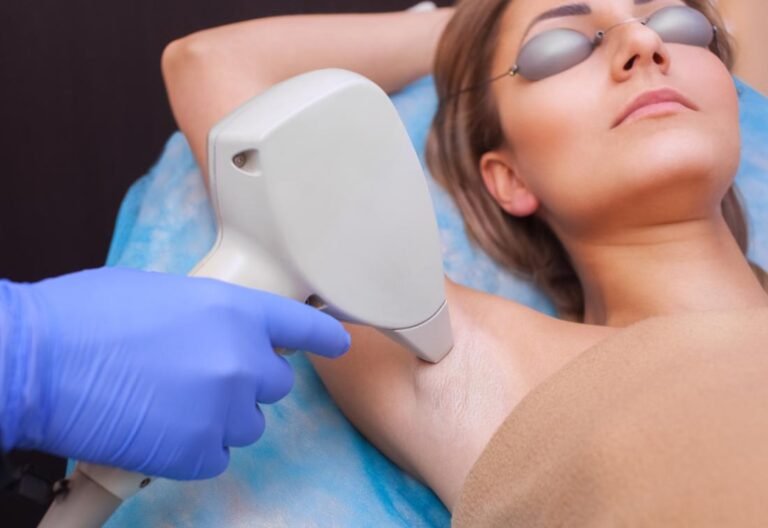
What Happens During a Laser Hair Removal Session?
The exact procedure depends on the device and area being treated.
A typical session may involve:
Step 1: Skin and Hair Assessment
The dermatologist or trained clinical team checks the treatment area.
Step 2: Preparation
The area is cleaned and prepared.
Step 3: Laser Treatment
Controlled laser pulses are delivered to the targeted hair follicles.
Patients may feel sensations such as mild warmth or a brief snapping feeling.
Step 4: Post-Treatment Care
The skin is assessed and appropriate aftercare is advised.
How Long Does a Laser Hair Removal Session Take?
Treatment duration depends mainly on the size of the area.
Smaller areas such as the upper lip may take less time than larger regions such as the back or legs.
The Trichoderm Centre treatment page notes that sessions may take approximately 15 to 45 minutes, depending on the treatment area.
Is Laser Hair Removal Painful?
The sensation differs between patients and treatment areas.
Many people describe:
- Mild warmth
- Tingling
- A brief snapping sensation
Modern laser systems and appropriate treatment settings are designed to improve patient comfort.
Sensitivity may also vary depending on the density and thickness of hair.
What Happens After Laser Hair Removal?
Temporary reactions may include:
- Mild redness
- Warmth
- Temporary sensitivity
- Mild swelling around follicles
These effects generally settle according to the individual’s skin response.
Follow your dermatologist’s specific aftercare recommendations.
Laser Hair Removal Aftercare
After treatment, you may be advised to:
- Avoid unnecessary sun exposure
- Use appropriate sun protection
- Avoid scratching the area
- Avoid harsh exfoliation temporarily
- Follow the recommended skincare routine
- Avoid waxing or plucking between sessions
Specific aftercare depends on the area and skin response.
How Many Laser Hair Removal Sessions Are Needed?
There is no fixed number appropriate for everyone.
The number of sessions may depend on:
- Hair thickness
- Hair density
- Treatment area
- Hair-growth cycle
- Skin type
- Hormonal influences
- Individual response
Because different follicles enter the active growth phase at different times, sessions are usually spaced apart.
When Can You See Laser Hair Removal Results?
Hair reduction develops progressively throughout the treatment course.
Patients may gradually notice:
- Slower regrowth
- Reduced hair density
- Finer hair
- Less frequent need for shaving
- Smoother-feeling skin
The degree and timeline of improvement vary between individuals.
Is Laser Hair Removal Permanent?
Laser treatment provides long-term hair reduction, but it should not be presented as guaranteed permanent removal of every hair.
Some fine hair may remain or gradually regrow.
Maintenance treatment may occasionally be considered.
Expectations should be discussed during consultation.
Why Can Hair Regrow After Laser Treatment?
Hair growth can be influenced by several factors.
These may include:
- Natural hair cycles
- Hormonal influences
- Treatment area
- Hair characteristics
- Individual biological response
Regrowth that occurs may sometimes be finer or less noticeable than before treatment.
Can Laser Hair Removal Cause Pigmentation?
Laser parameters need to be selected according to skin type.
Inappropriate treatment settings, sun exposure or individual skin sensitivity may increase the risk of unwanted skin reactions.
This is particularly important for Indian skin tones.
Dermatologist supervision and appropriate treatment selection help reduce unnecessary risk.
If pigmentation is already a concern, read our guide on Pigmentation Treatment in Nagpur.
Is Laser Hair Removal Safe for Indian Skin?
Laser technology can be used across different skin tones when an appropriate device and treatment settings are selected.
Factors that should be considered include:
- Skin pigmentation
- Hair colour
- Hair thickness
- Recent tanning or sun exposure
- Individual sensitivity
A dermatologist should evaluate the patient before treatment.
Laser Hair Removal vs Waxing
These approaches work differently.
Waxing
Waxing removes hair temporarily from the root.
Hair eventually regrows and the process needs to be repeated.
Laser Hair Reduction
Laser treatment progressively targets hair follicles over several sessions.
The goal is longer-term reduction in hair density and regrowth.
Laser Hair Removal vs Shaving
Shaving removes hair above the skin surface.
It is quick but needs frequent repetition.
Laser treatment requires a structured series of sessions but aims to progressively reduce the amount of hair that grows back.
Can Laser Hair Removal Help Razor Bumps?
Frequent shaving can cause irritation or bumps in some people.
By reducing the need for repeated shaving and reducing hair density, laser hair reduction may help selected patients with recurrent razor-related irritation.
Common Laser Hair Removal Mistakes
Waxing Between Sessions
Removing hair from the root can interfere with treatment.
Skipping Appointments
Treatment timing is planned around hair-growth cycles.
Excessive Sun Exposure
Tanned or recently sun-exposed skin may affect treatment planning.
Expecting One Session to Remove All Hair
Multiple sessions are generally required.
Choosing Treatment Only by Price
Device quality, dermatologist supervision, skin type assessment and appropriate laser settings are important considerations.
How to Choose a Laser Hair Removal Clinic in Nagpur
When looking for Laser Hair Removal in Nagpur, consider:
Dermatologist-Guided Assessment
Your skin type and hair characteristics should be evaluated first.
Appropriate Technology
Laser parameters and technology should be suitable for your skin and hair.
Personalised Treatment
Settings should not be identical for every patient.
Clear Expectations
A responsible consultation should explain the need for multiple sessions and the possibility of maintenance.
Proper Aftercare
Patients should receive appropriate instructions for skin care between sessions.
Laser Hair Removal in Nagpur at Trichoderm Centre
The treatment plan is customised according to skin type, hair thickness, treatment area and individual requirements.
You can learn more about Laser Hair Reduction at Trichoderm Centre.
Laser hair reduction also forms part of the clinic’s broader Aesthetic and Laser Dermatology services.
Frequently Asked Questions About Laser Hair Removal
How many Laser Hair Removal sessions are usually needed?
Multiple sessions are generally required because hair grows through different cycles. The exact number depends on the treatment area, hair characteristics and individual response.
Is Laser Hair Removal permanent?
Laser treatment provides long-term hair reduction. Some fine hair may remain or regrow, and occasional maintenance sessions may be recommended.
Can I shave between laser sessions?
Shaving may generally be allowed or recommended, while waxing, threading and plucking are commonly avoided because they remove hair from the root.
Is Laser Hair Removal painful?
Patients may experience mild warmth or a brief snapping sensation. Comfort varies by treatment area and individual sensitivity.
Can facial hair be treated with laser?
Selected areas of unwanted facial hair can be treated after assessment of hair type, growth pattern and skin tone.
Can men undergo Laser Hair Removal?
Yes. Men commonly undergo treatment for areas such as the back, chest, shoulders, neck and selected facial regions.
Is Laser Hair Removal safe for darker Indian skin?
Treatment can be performed on different skin tones when suitable laser technology and appropriately selected settings are used.
Can Laser Hair Removal help ingrown hairs?
Progressive hair reduction may help reduce recurrent ingrown hairs associated with shaving or other temporary hair-removal methods in selected patients.
Reduce the Hassle of Repeated Hair Removal
Laser hair reduction is not about removing every hair in a single appointment.
It is a progressive treatment designed to reduce unwanted hair over multiple sessions according to the natural hair-growth cycle.
The right treatment begins with assessing your skin type, hair characteristics and treatment area.